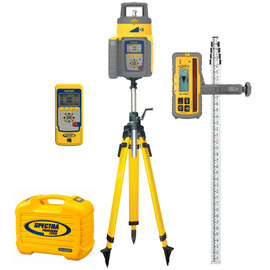
SPECTRA PRECISION GL622N-19 DUAL GRADE LASER
Dual-slope grade laser with HL760 digital receiver, remote, 15-ft tenths rod and elevator tripod
Includes HL760 receiver, RC602N remote, grade rod, FGC20 elevator tripod and NiMH battery pack
One laser. Two axes. Run it from the tripod or from 490 feet away.
 Authorized Dealer
Spectra Precision GL622N-19 Laser Package INCLUDES
 CLICK TO ENLARGE
- GL622N Dual Grade Laser Transmitter
- RC602N Radio Remote ControlFull-function two-way remote, 2 x AA
- HL760 Laser Receiver (Laserometer)Digital readout of elevation, 5 in. reception height
- Rod Clamp for Receiver C70
- 105516 Vertical Adapter for HL Receiver
- 15-ft Aluminum Telescoping Grade Rod, Feet & Tenths (SitePRO 11-815-T)
- SitePRO FGC20 Composite Elevator Tripod (01-FGC20ELAZ-B)
- Rechargeable NiMH Battery Pack (Q104667)Can also be powered by alkaline batteries as a backup power source.
- Worldwide Charger (Q104781)
- Carrying Case
- Operating Manual
- 5-Year Warranty
The laser
Spectra Precision GL622N: one laser, two axes
The Spectra Precision GL622N is a dual grade laser, also called a dual slope laser: it grades up to ± 25% on the Y axis and the X axis, one axis at a time, and self-levels electronically across a ± 14 degree range. An intuitive keypad and graphic display put every grade and alignment function a few presses away, and the laser self-plumbs for vertical work such as anchor bolts, forms, tilt-up and curtain wall plumbing.
The HL760 receiver and the RC602N remote in this package talk to the laser by radio. That link is what unlocks Grade Match, PlaneLok and Axis Alignment. Working diameter is about 2,600 feet with the receiver. Three rotation speeds (300, 600 and 750 rpm), a Class 2 beam, IP67 sealing, a 3-foot drop onto concrete and a 5-year warranty from Spectra Precision round it out.
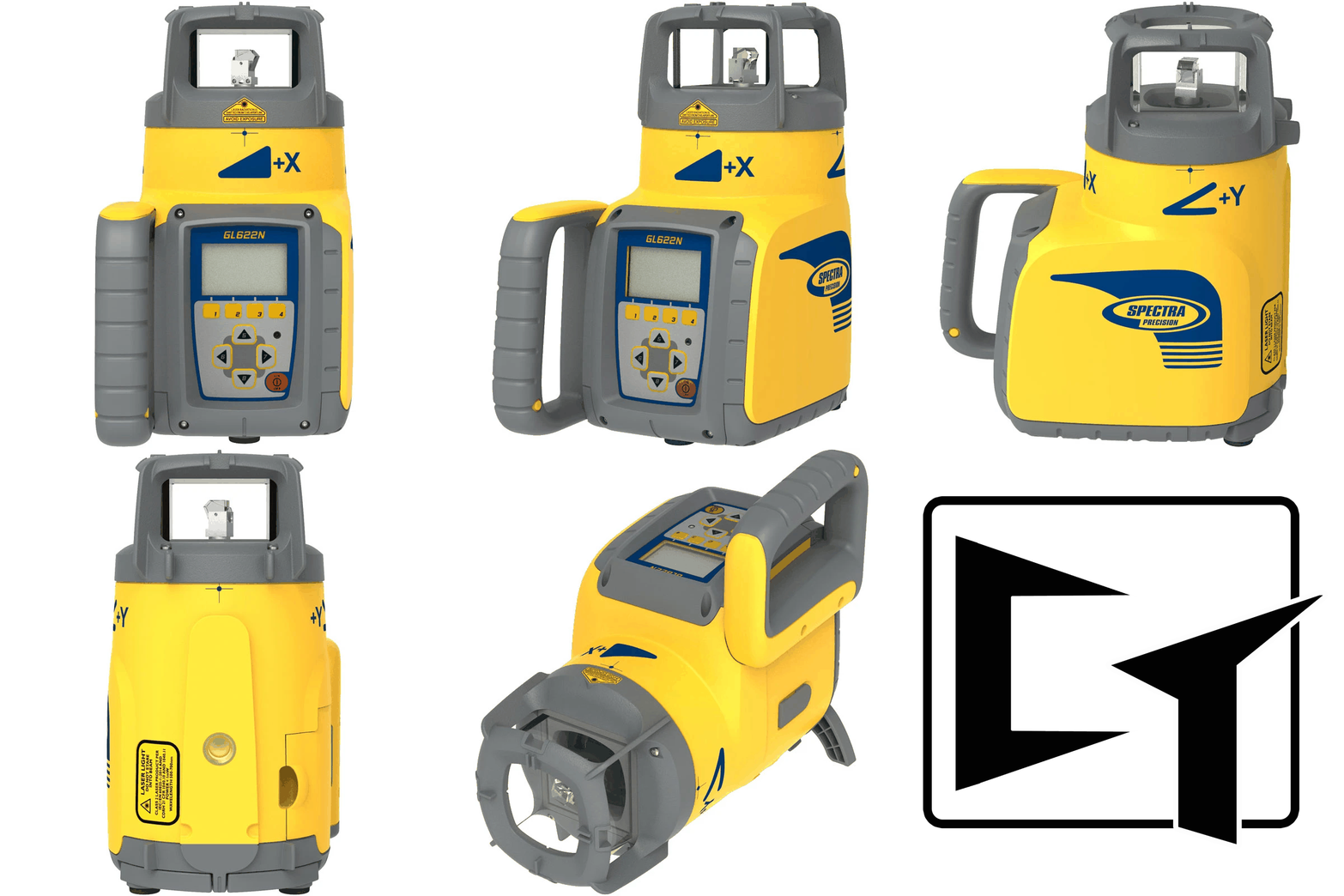
Features and benefits
What the GL622N gives you
Ten reasons the GL622N earns its place on the jobsite, from Spectra Precision's own feature list.
Multiple applications
One dual slope laser, every setup
Control level, alignment and dual grade, and set 90 degrees. It also self-plumbs for vertical work and 90-degree layout.
Long range
One person, a 2,600 ft working diameter
One-person elevation and grade control across an 800 m (2,600 ft) diameter increases productivity.
Automatic self-leveling
Fast, easy setup
Horizontal level, grade or vertical alignment sets itself up. Roughly level the head and the laser does the rest, across about +/-14 degrees.
Automatic Grade Matching
Find the grade that is already there
The laser moves to the on-grade position on the receiver on its own by talking to it wirelessly, and the grade is calculated. Ideal when a constant fall is wanted but the grade is not known: renewing existing driveways or matching existing surfaces.
Grade range
Fully compensated, -25% to +25%
A large, fully compensated grade range keeps the laser leveled no matter what grade you dial in, which cuts errors and improves productivity.
Anti-vibration filter
Tall tripod? High wind? Keep working
Vibration and strong wind affect a laser, especially on a tall tripod. The anti-vibration filter can be set to the conditions, so work continues regardless of wind or excessive vibration.
Rugged
A 3-foot drop. A 5-foot pushover.
Withstands a 1 m (3 ft) drop directly onto concrete, or a 1.5 m (5 ft) pushover on the tripod, eliminating costly repairs.
PlaneLok
Locks out temperature error
Keeps the laser beam fixed to the receiver in a set position, eliminating errors caused by fluctuating temperatures and keeping the laser accurate and error free.
Automatic Axis Alignment
Do not let a misaligned axis cost you
Alignment to the grade hub is critical when working with grade. If it is off, the error is introduced and exaggerated. Axis Alignment lets you set up simply and quickly, maintaining accuracy and eliminating costly errors. GL622N only.
Mask Mode
Switch the beam off where you do not want it
A virtual masking function turns the beam off on up to 3 sides, avoiding false readings from glass reflections and interference with other lasers on the same jobsite.
Need an invisible beam? The GL622IR is the infrared version: an invisible, Class 1 beam, the safest laser classification, for special applications where a visible beam is a safety hazard, a distraction or not permitted. It is not used for vertical alignment or 90-degree layout.
What the laser does
Run the whole job from one setup
The GL622N does the work that usually takes a second laser, a second person or a lot of walking.

AXIS ALIGNMENT
Point the slope where you need it. Do not touch the tripod.
Set the HL760 on your direction hub, aim the laser roughly at it (within 40 degrees) and press go. The GL622N electronically turns its grade axis to the receiver, the same result as rotating the laser on its base. Sports fields, parking lots, driveways, any field where the slope is not square to the setup. GL622N only.
Works one axis at a time, up to 330 ft.
PLANELOK
Lock the beam on grade and walk away.
Mount the HL760 at your benchmark. PlaneLok servos the beam onto it and keeps it there, horizontal or vertical, up to 330 feet. Pour a slab, set forms or plumb a wall to a fixed point without re-checking the setup. It also removes beam drift from vibration and changing temperatures through the day, which is why it is the setting for concrete pads. If the beam gets blocked for a minute the laser alerts you, so you never work off a lost lock.


GRADE MATCH
Find the slope that is already there.
Put the laser at one point and the receiver at the other, up to 330 feet apart. The GL622N measures the existing grade and shows it on the laser and the remote. Match a driveway, a pipe run or a curb. No on-grade stakes, no math.
STEEP SLOPES
Grade steep slopes without guessing.
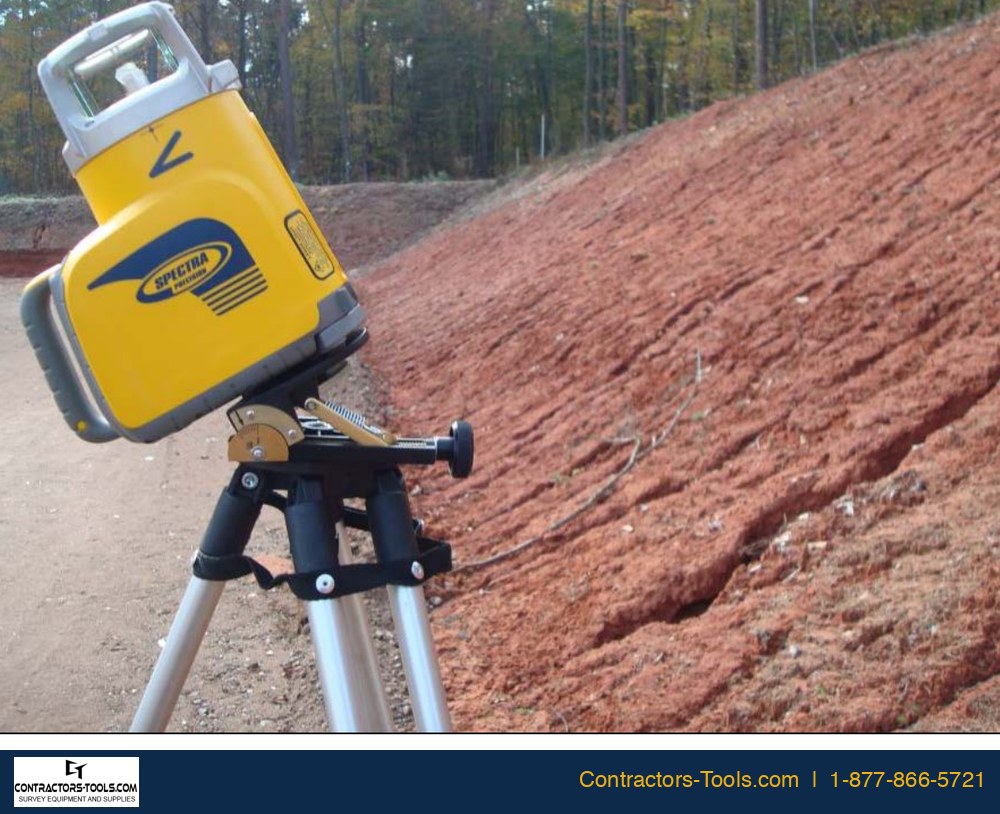
Set the laser at the bottom of the slope on the M401 tilting base, tilt it until the receiver at the hub catches the beam, then start PlaneLok. The laser locks onto the hub and holds it. This is Spectra's own steep-slope procedure, and the M401 is $156.95.
Hands-on
Set up and grade in four steps
1. Power it up. The laser ships with the Q104667 NiMH pack. Charge it inside or outside the laser with the Q104781 charger, or run four D-cell alkalines as a backup. Hold the ON/OFF button for one second to turn the laser on.
2. Let it check itself. The laser runs a temperature and reference check, then the bubble symbols flash until it has self-leveled. Do not start a menu function before the check is finished.
3. Dial in the grade. Press the grade-entering button, type the X and Y values (Digit Select, or Step and Go), and confirm. The laser self-levels to the grade and the bubbles flash until it is there.
4. Pair and go. The RC602N and the HL760 pair under Settings. Once paired you can change grade from the remote and use the automatic functions below.
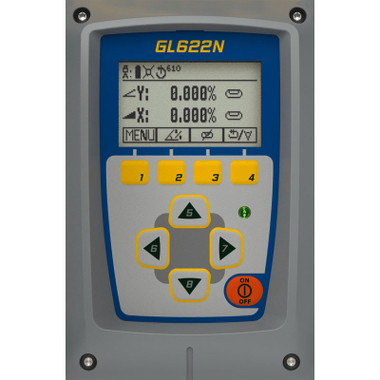
Automatic functions
PlaneLok, Grade Match and Axis Alignment, step by step
PlaneLok: lock the beam to a fixed elevation
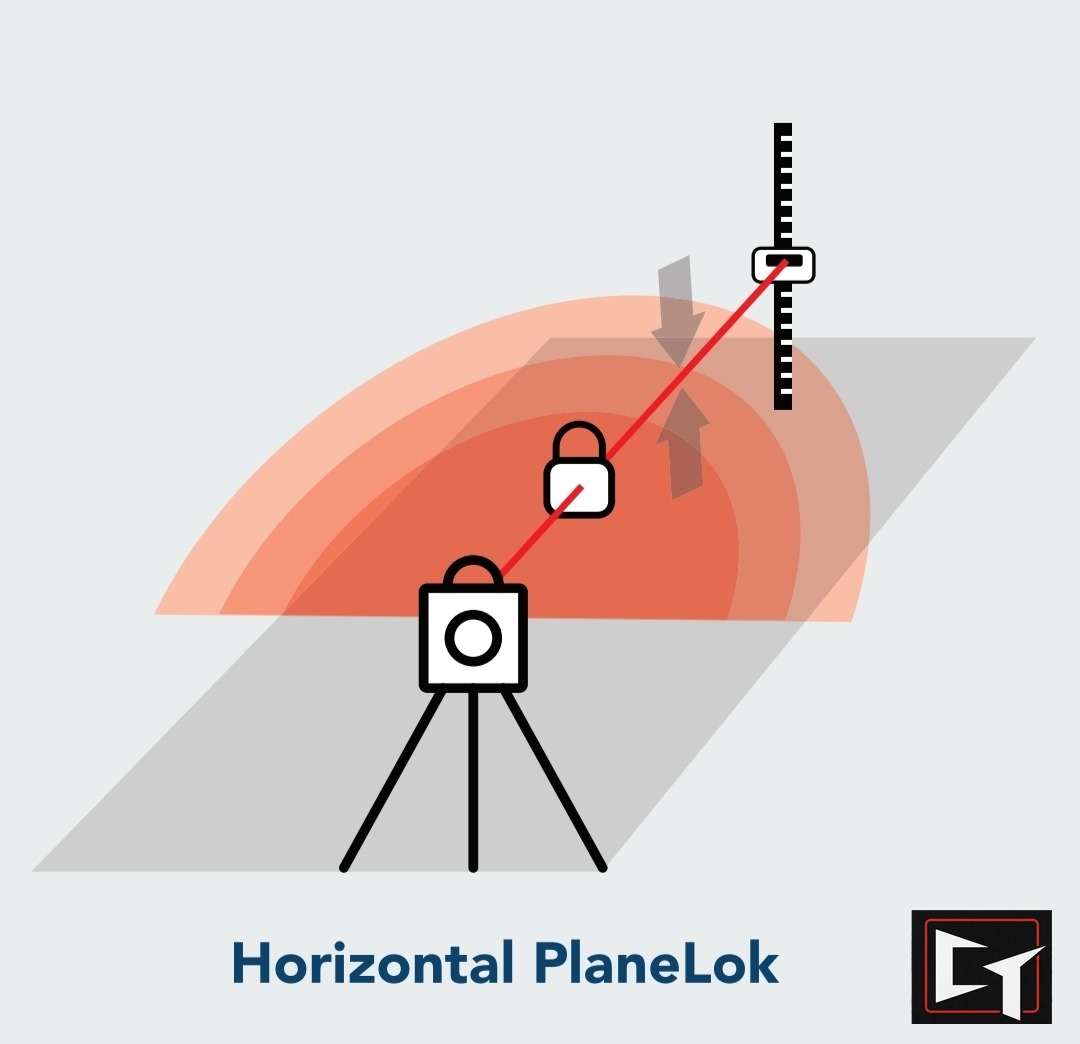
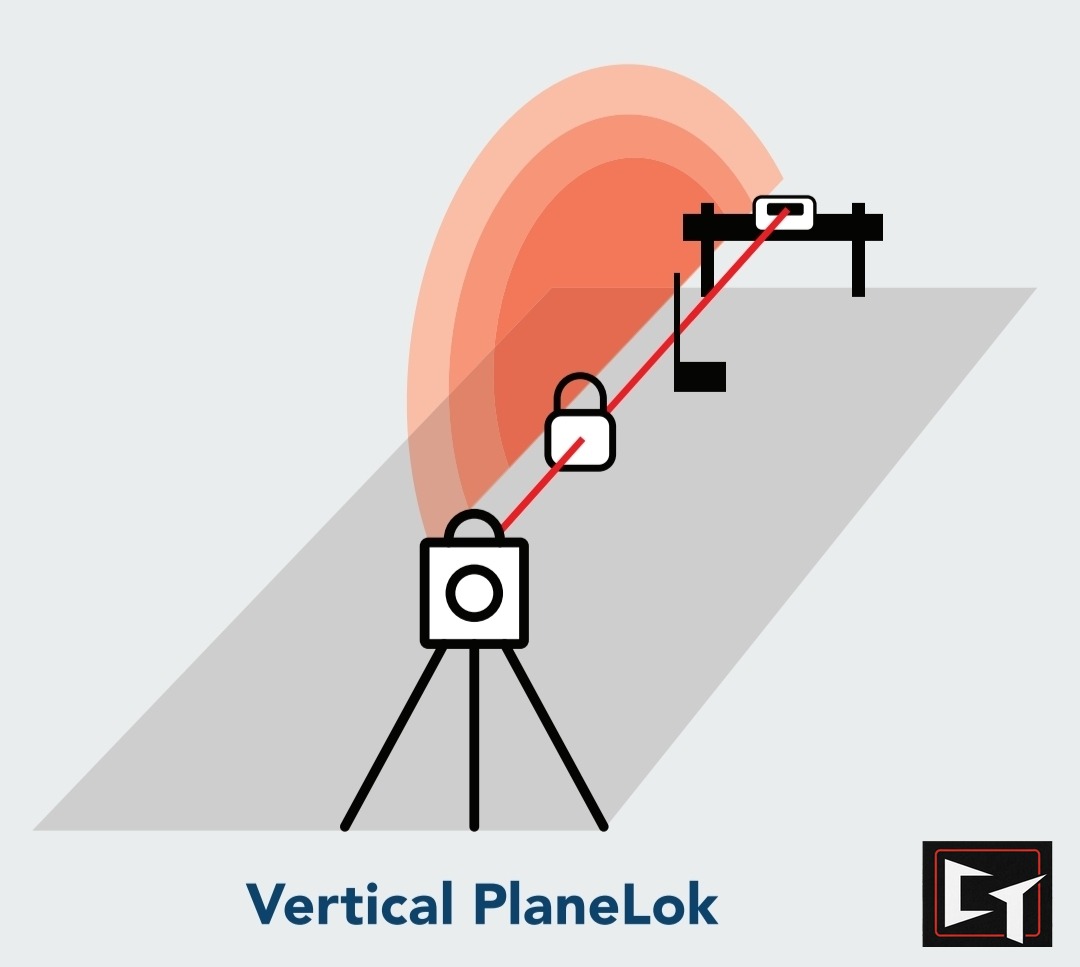
A radio in the laser and the receiver keeps the beam locked to a fixed elevation, or a fixed direction when the laser is set up vertically. The laser works to hold the beam in one position on the receiver. That improves accuracy and suits work that demands it, such as concrete pads, and it removes beam drift caused by vibration or changing temperatures through the day.
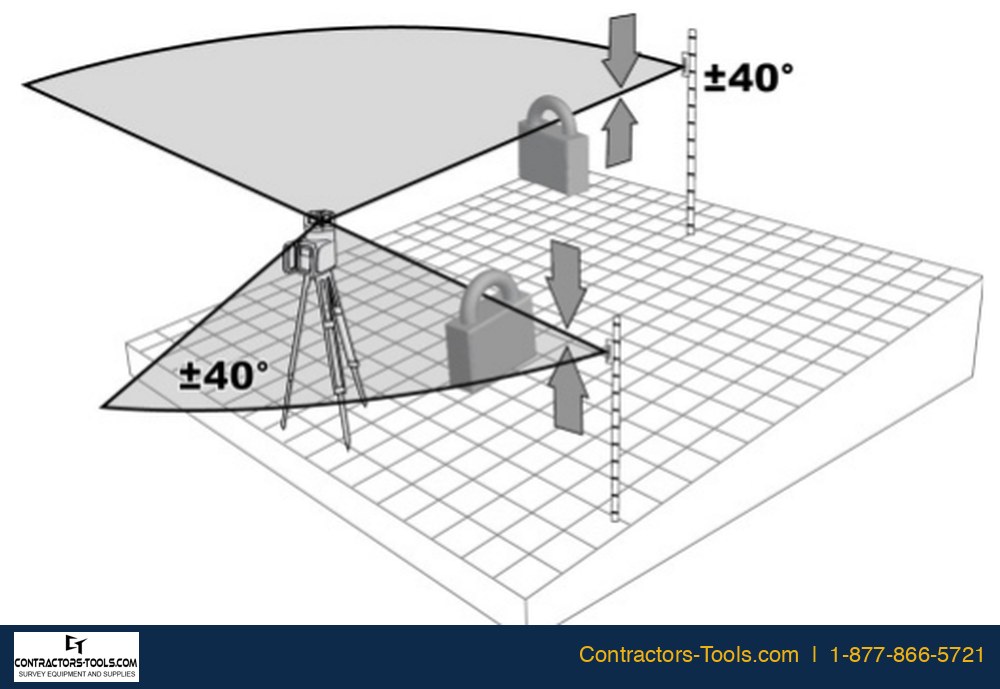
Set up: set the laser over the reference point and mount the HL760 on a grade rod at the second point, on grade. Turn the laser on the tripod until it is roughly aimed at the receiver (alignment range is +/-40 degrees on both axes). Press MENU, choose PlaneLok, choose the axis and press button 4. The laser searches for the receiver, then the lock symbol goes solid and the HL760 stops flashing -PL-. Press ESC (button 3) to exit. If the beam is blocked for a minute an alert appears and you restart PlaneLok. For batter boards, Spectra lists the M402 adapter.
Grade Match: measure an existing grade
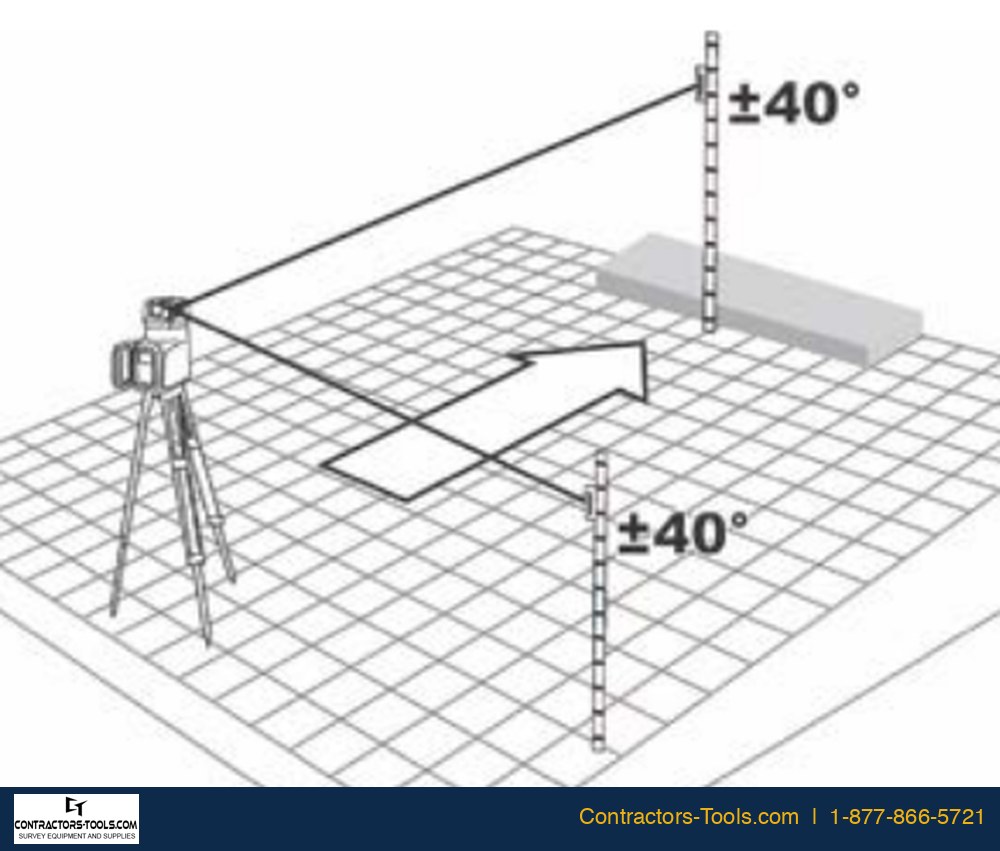
Set up: set the laser over the reference point. Check the laser elevation next to it, then position the HL760 at the second point WITHOUT changing the receiver height on the rod. Aim the laser roughly at the receiver (+/-40 degrees), press MENU, choose Grade Match, choose the axis and start. The HL760 flashes -GM-, and when it is done the laser and the remote show the measured grade value. If the limits are exceeded you get a Grade Match Failed message.
Axis Alignment: point the grade axis at a hub (GL622N only)
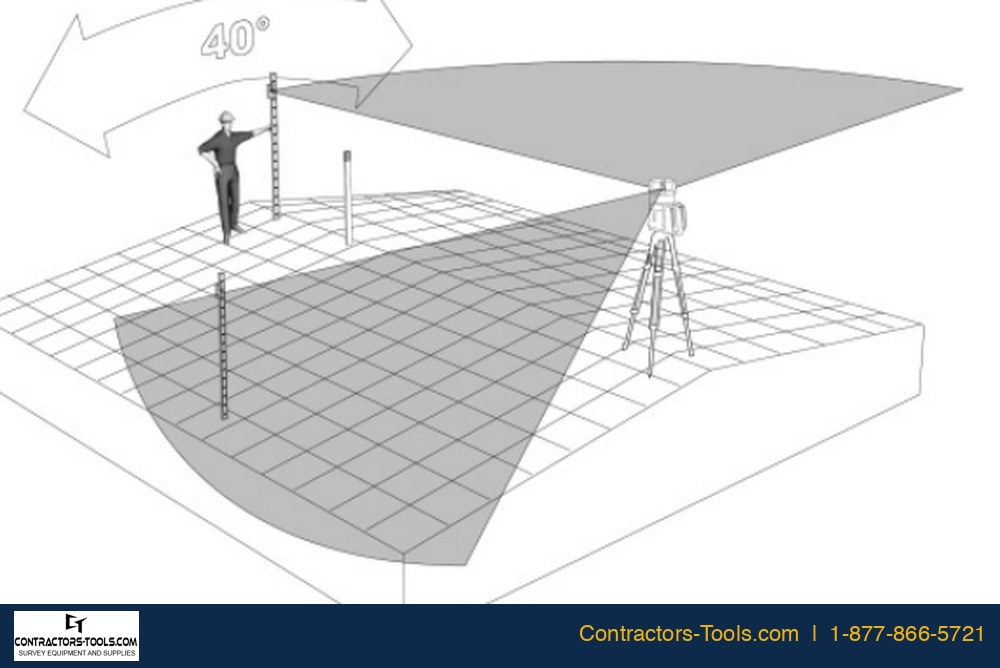
Set up: set the laser over the reference point and place the grade rod with the HL760 at the direction hub, up to 330 ft (100 m) away. Aim the laser roughly at the receiver, put the receiver in the beam to save time, press MENU, choose Axis Align, pick the axis and press button 4. The HL760 flashes -AA- while the laser aligns, and a short line over X or Y confirms it is done.
Mask mode and Standby
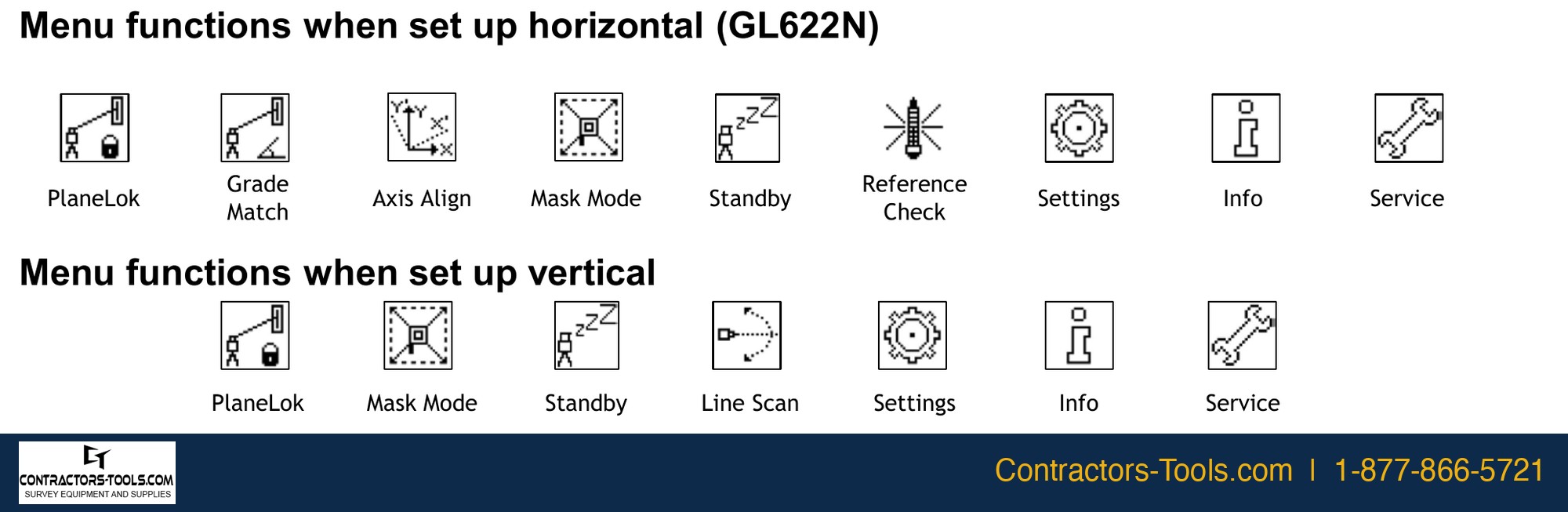
Mask mode switches the beam off in the sectors you pick, so you do not interfere with other crews. It is cleared every time the laser is powered up. Standby stops self-leveling and turns the beam off while the HI alert stays active.
Settings you will actually use
Grade display in percent, per mille or degrees. Sensitivity (low, mid, high). HI-alert (5 minutes, 30 seconds or off). Password. RF channel 1 to 6 (re-pair after changing it). A user name that shows at power-up. Position info (latitude and altitude) for high grades. Menus in 14 languages.
Error codes and what to do
Code 120: HI alert, unit height changed, check beam elevation. 130: mechanical limit during Axis Alignment or Grade Match, move closer to the alignment point and check the slope is under 25%. 131: rake angle limit, pre-tilt the unit closer to the alignment point. 140: beam blocked, clear the path to the receiver. 141: alignment timed out, check radio range and a stable setup. 150: no receiver, make sure it is on and paired. 152 / 153: receiver not found or lost, check the range and restart. 160 or 21: contact service (21 can be cleared by repeating pairing and re-entering your settings). Any message clears with a short press of button 4.
Laser specifications
Spectra Precision GL622N Laser SPECIFICATIONS
| Leveling accuracy | ± 0.5 mm / 10 m, 1/16 in. @ 100 ft (10 arc seconds) |
| Grade accuracy | ± 1.0 mm / 10 m, 1/8 in. @ 100 ft (20 arc seconds) |
| Grade range (Y and X) | ± 25% on both axes, not at the same time |
| Self-leveling range | approx. ± 14 degrees |
| Working diameter (with receiver) | approx. 2,600 ft (800 m) |
| Rotation speed | 300, 600 and 750 rpm |
| Laser | 639 nm, Class 2 |
| Radio range, remote (RC602N) | up to 490 ft (150 m) |
| Radio range, receiver (HL760) | up to 330 ft (100 m) |
| Power | NiMH rechargeable pack or 4 x D alkaline batteries |
| Battery life | 35 hours NiMH, 40 hours alkaline |
| Dust and water | IP67 |
| Operating / storage temperature | -4 to 122 F / -4 to 158 F |
| Tripod mounts | 5/8 x 11, horizontal and vertical |
| Weight | 6.8 lb (3.1 kg) |
| Warranty | 5 years |
Source: Spectra Precision GL612N/GL622N datasheet and user guide. Accuracy and range are measured at 21 °C along the axis under optimal atmospheric conditions.
The receiver in the box
The HL760 is what makes this kit better
Every GL622N package comes with the HL760 and its C70 rod clamp, both in the box: a digital-readout receiver with a 5-inch catch window, a number that tells you how far off grade you are, a beeper you can hear across the site, a body that survives a 10-foot drop onto concrete, and a built-in radio that talks to your laser. It is not an accessory. It is half of what makes the GL622N work.

BIGGEST WINDOW
5-inch reception height
The largest reception height of any rod-mounted receiver. Catch the beam sooner, read it from anywhere in the window, and stop sliding the receiver up and down the rod.
ARMORED ALL AROUND
Drop it. Drop it again. It keeps working.
Rubber armor wraps the whole case: top, sides and bottom. Rated for a 10-foot (3 m) drop onto concrete. Toss it, drop it, it takes a beating and keeps on measuring.
KEEP ROLLING
Drop it in the creek. Keep going.
IP67: dust-tight and sealed against immersion. A puddle, a creek, a bucket of concrete: rinse it off with the hose and keep working.
IN THE BOX
The C70 rod clamp comes with it.
The HL760 ships with the C70 rod clamp with bubble vial, so it goes straight onto your grade rod, round, oval, square or rectangular. Mount it in the standard or the offset position (the receiver detects which). The 15-ft rod and the 105516 vertical adapter are in this package too.
The receiver takes more abuse than anything else in the system. It rides the rod, gets set down in the dirt, knocked over and dropped, all day, every day. That is why it is built tough: rubber armor on every side, an IP67 seal and a 10-foot drop rating, made to last in demanding conditions.
SMART READINGS
It does the math. You read one number.
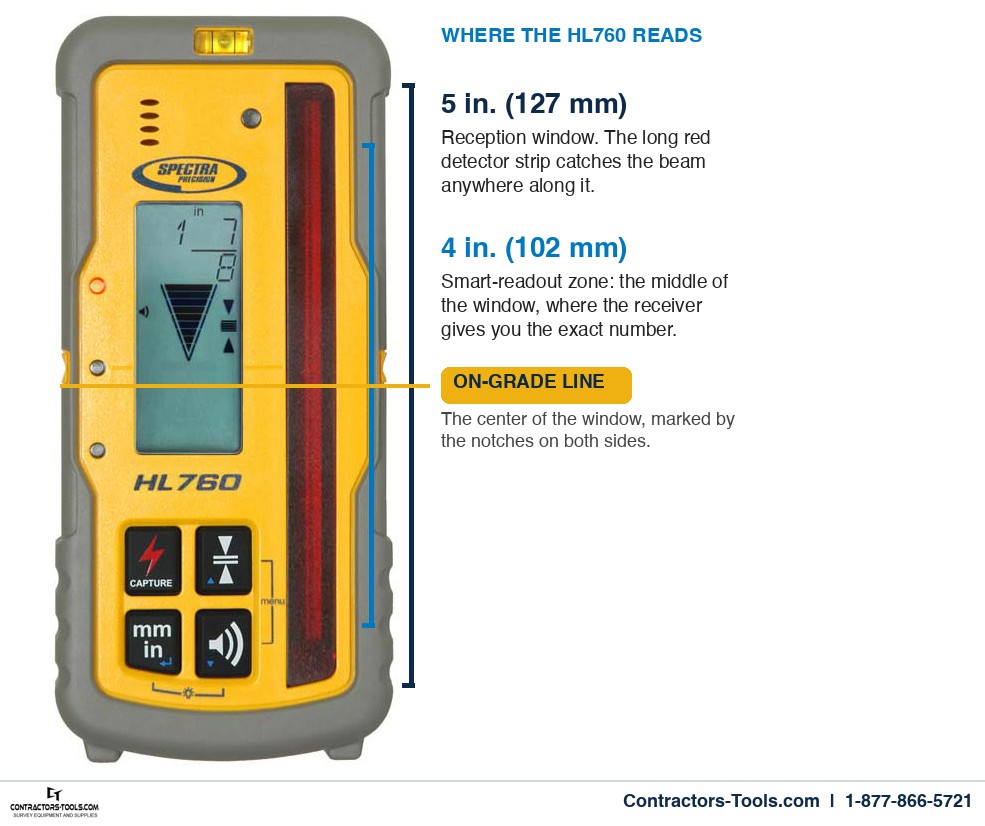
Instead of sliding the receiver up and down the rod to find on-grade, the HL760 tells you exactly how far above or below grade you are, as a number, in the middle 4 inches (102 mm) of its 5-inch window: 2 inches above grade and 2 inches below. Four ways to read it, all at once:
Where it reads, and what you see on the receiver
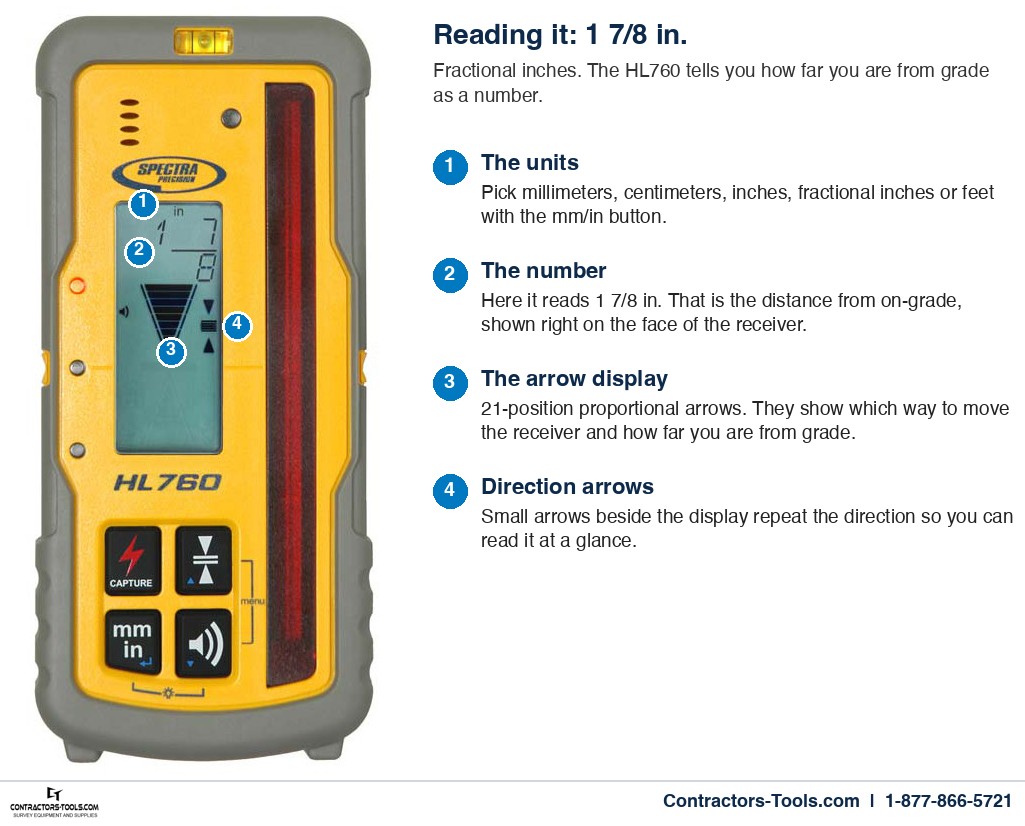
The long red detector strip is the 5-inch reception window. The numeric readout works in the middle 4 inches of it. Here are two real HL760 faces, in two different units:
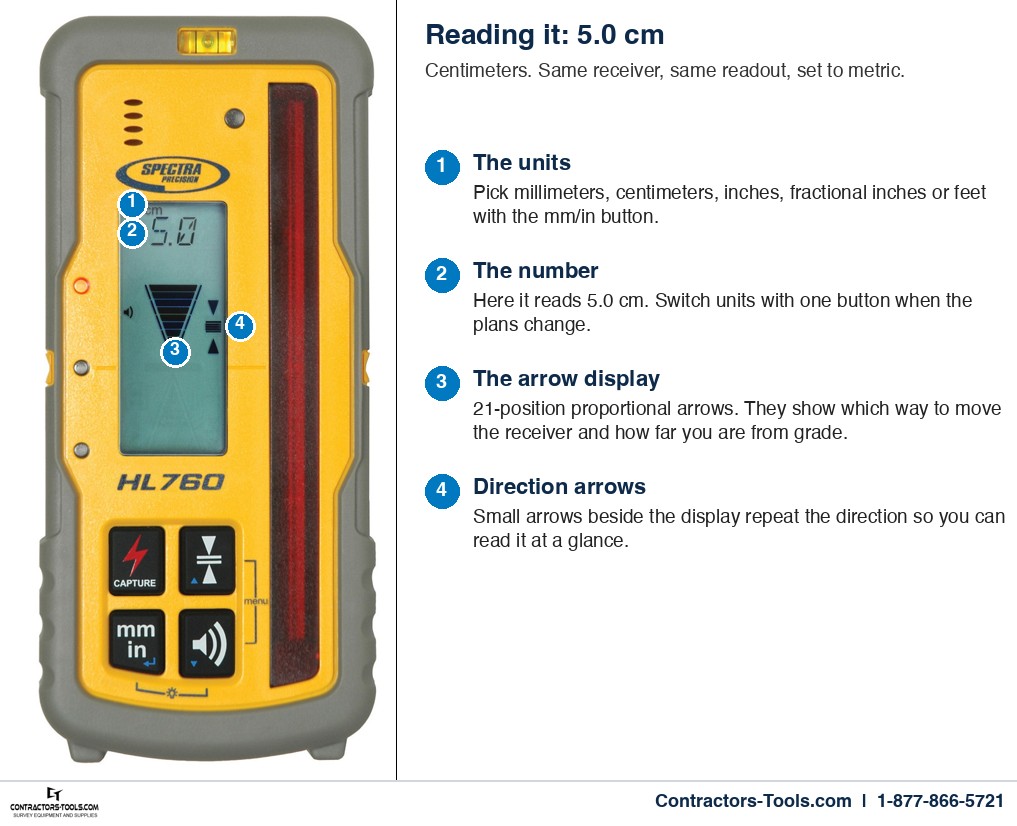
Pick the units that match your plans and your rod
- Millimeters
- Centimeters
- Inches
- Fractional inches
- Feet
Fraction reduction can be switched on so 4/8 in. reads as 1/2 in., or left off when you are checking surface flatness and want the same denominator every time. Switch the readout to feet to match the tenths rod in this package.
Five accuracy settings, in every unit
| Setting | Millimeters | Decimal inches | Fractional inches | Good for |
|---|---|---|---|---|
| Ultra Fine | 0.5 mm | 0.02 in. | 1/32 in. | Finish concrete, forms, fine surface work |
| Super Fine | 1.0 mm | 0.05 in. | 1/16 in. | Forms and flatwork |
| Fine | 2.0 mm | 0.10 in. | 1/8 in. | General grade checks |
| Medium | 5.0 mm | 0.20 in. | 1/4 in. | Site prep and base |
| Coarse | 10.0 mm | 0.50 in. | 1/2 in. | Rough dirt work |
Tolerance is an accuracy setting on the receiver. Use a wider tolerance while moving dirt and a narrow one for concrete or other fine grade. Spectra receivers hold their tolerance accuracy over the receiver's full operating range, which, with the digital readout and the rugged build, helps accuracy. Go tight for forms and finish concrete, loose for rough dirt. The inch and fraction values are the receiver's own settings, not exact conversions of the millimeters. The clamp can sit in the standard or the offset position, and the HL760 detects which and shows an offset symbol; offset shows more grade information above grade, which helps when you are driving stakes down to grade.
Front and rear displays
Two LCDs, front and back, so whoever holds the rod or stands behind it can read the number. Optional backlight, and 60+ hours on two AA batteries (about 16 hours with the backlight on continuously).
Catch the beam sooner
A 127 mm reception height catches the beam sooner and holds it on a moving rod, so you stop hunting for the plane. The numeric readout covers the middle 4 inches of that window.
The loudest we sell
We tested the beeper against the other receivers we sell, and the HL760 is the loudest. It is also the one with the speaker on the front, facing the operator, so you hear it where you stand.
Fewer parts, fewer failures
Spectra builds the HL760 around a patented Light Bar detector, one continuous bar instead of an array of separate photocells. Fewer components and fewer solder joints is why Spectra can publish a 10-foot drop spec. Rated for -4 to 140 degrees F.
Strobe-proof
A patented anti-strobe sensor ignores the LED strobes and hazard beacons that fill a jobsite, so a passing truck does not give you a false reading. Pick high, medium or low sensitivity in the menu.
Reads the beam off-angle
It reads the laser at up to 45 degrees off axis, so a rod that leans or a receiver that is not square to the laser still sees the beam.
Reach
It picks up the laser from 3 feet out to a 1,500-foot radius, depending on the laser. With the GL622N the working diameter is about 2,600 feet. The built-in radio talks to the GL622N from up to 330 feet (100 m).
Talks to your laser
The built-in two-way radio is what switches on Grade Match, PlaneLok and Axis Alignment, and Fingerprint, which locks the receiver to your laser and rejects every other laser on the site.
Fits your rods, even your other lasers
The C70 clamp is in the box and fits round, oval, square or rectangular grade rods, in the standard or the offset position (offset helps when you are driving stakes down to grade). The HL760 also reads most red-beam rotary lasers from Topcon, Leica and other brands as a plain detector.
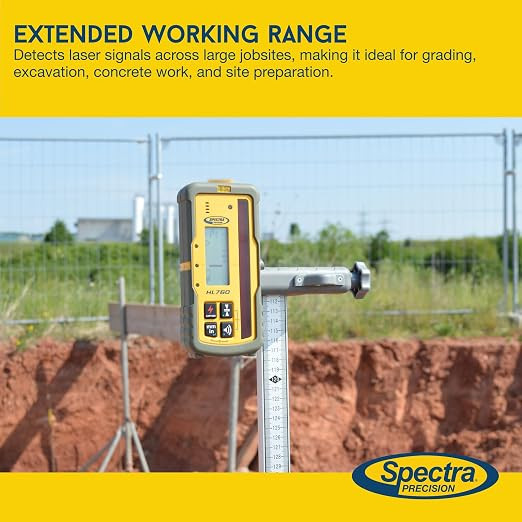
ON THE ROD, ON THE JOB
Check cut and fill in seconds, with one person.
Clamp the HL760 to the rod, hold it in the beam and read the number. Foundations, forms, footings, trench grade checks, driving stakes to grade, site prep. When a grade changes, the laser and receiver keep talking, so the plane stays where you put it.
How the HL760 stacks up
| HL450 | HL760 (in this kit) | CR700 | |
|---|---|---|---|
| Digital readout of elevation | Yes | Yes | Yes |
| Reception height | 4 in. | 5 in. | 5 in. |
| Accuracy levels | 3 | 5 | 6, including 25 mm machine |
| Working radius | 650 ft | 1,500 ft | 1,500 ft |
| Drop rating | 5 ft | 10 ft | 10 ft |
| Built-in two-way radio | No | Yes | Yes |
| Grade Match, PlaneLok, Fingerprint | No | Yes | Yes |
| Mounts on a machine (magnetic mount) | No | No | Yes |
HL760 specifications
| Rod clamp | C70 rod clamp with bubble vial, included (standard or offset position) |
| Digital readout units | mm, cm, in, fractional in |
| Reception height | 5 in. (127 mm) |
| On-grade sensitivities | Ultra Fine 0.5 mm, Super Fine 1 mm, Fine 2 mm, Medium 5 mm, Coarse 10 mm |
| Power | 2 x AA, 60+ hours continuous operation |
| Dust and water | IP67 |
| Weight | 9.5 oz (0.27 kg) |
| Warranty | 3 years |
Hear it. See it.

The Spectra HL760 is the loudest laser receiver we sell, and the only one of the four we tested with the speaker on the FRONT facing the operator. Here it is at max volume.
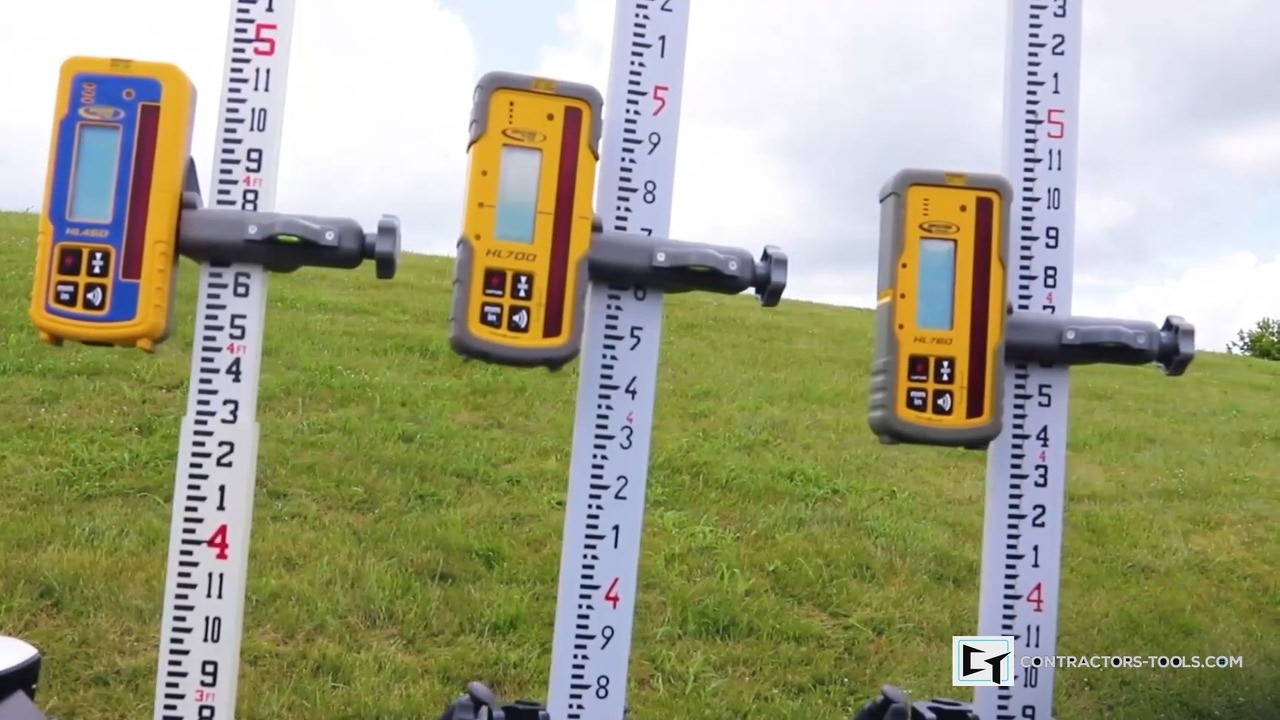
A numeric elevation readout tells you how far off grade you are without sliding the receiver up and down the rod. Here are the three Spectra receivers that do it.
Want the operator in the cab to read it too? Add a second HL760 and it becomes a wireless remote display, up to 260 feet from the rod. That is an extra receiver, sold separately ($416.00) and a bonus use, not what the HL760 is bought for. Watch how it pairs.
The remote in the box
The RC602N remote: run the laser from where you stand

Change the grade without walking back to the laser. The RC602N puts the laser in your hand from up to 490 feet away. Dial in a new slope, start an automatic function, read the display, and keep the crew moving. When the plan changes, you change the grade from where you are standing.
- Up to 490 ft radio range
- 130 hours on two AA batteries
- IP66 dust and water
- 0.57 lb (0.26 kg)
- Pairs with the laser by radio, up to two remotes per laser
Spare or second remote: RC602N radio remote, $279.95.
RC602N specifications
| Radio range to the laser | up to 490 ft (150 m) |
| Power | 2 x AA alkaline batteries |
| Battery life | 130 hours |
| Dust and water | IP66 |
| Weight | 0.57 lb (0.26 kg) |
The tripod in the box
The elevator tripod is half the system
Set it up. Crank it up above the jobsite debris. Go to work. Most people see a tripod. On the job it is the difference between a beam that reaches your work and one that stops at the first parked truck. And because the legs are fiberglass, not aluminum, it holds that height through the heat of the day and the chill of the morning.
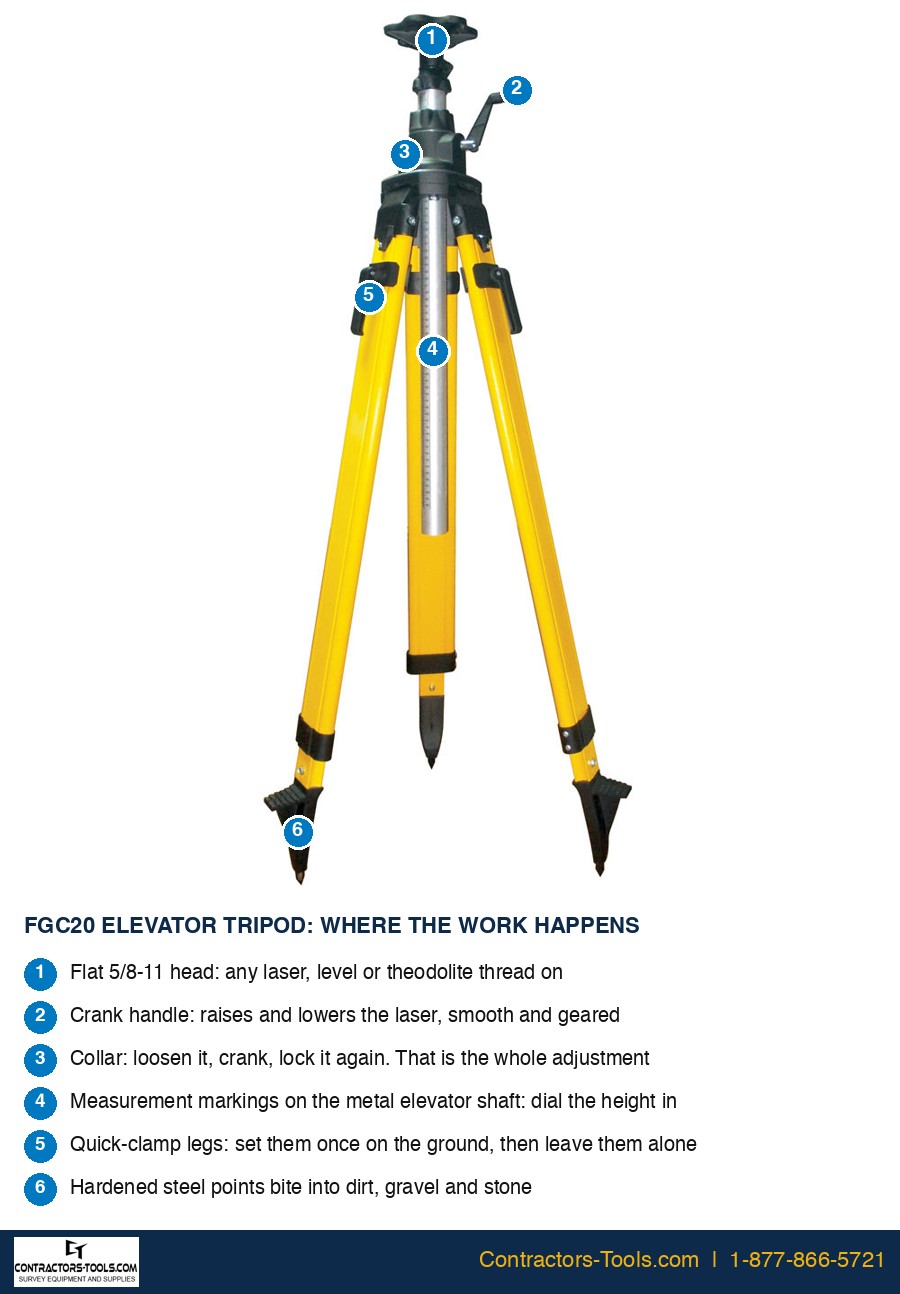
Set the height in three moves
Loosen the collar
One turn and the elevator column is free.
Crank the handle
Read the measurement markings on the metal shaft and dial the beam up or down, as little as you like.
Lock the collar and go to work
The legs never moved. Nothing to re-level.
No adjusting all three legs, again and again. Set the legs once, then let the elevator do the fine work.
Get the beam above everything
Bushes, fences, parked trucks, stacked material, the machine itself. Fully extended the FGC20 reaches 90 inches, about 7-1/2 feet, so the beam clears what is in the way and your receiver still sees it.
Fine-tune the height without touching the legs
Need the beam a half inch higher to match your benchmark? Loosen the collar, crank, lock. On a fixed-height tripod that means loosening all three legs, resetting them, and hunting for stable again, every time.
Hills and elevation changes get easier
Set the three legs once, wherever the ground lets you: a slope, ruts, a spoil pile, the edge of a trench. The GL622N self-levels across about 14 degrees, so the head only needs to be roughly level. When the ground rises or drops, a few turns of the crank puts the beam where you need it, with no re-setting the legs.
Built for machine control
A machine-mounted receiver rides on a mast or boom, well above the ground, and the beam has to reach it at every working position. The elevator column is what gets the laser up to the receiver. Without it the laser sits too low and you lose signal.
Come back to the same height
The markings on the shaft let you return to a known beam height after a move, a bump, or a lunch break, instead of guessing.
Steady when it is tall
Double-banded composite fiberglass legs, quick-clamp locks, a flat 5/8-11 head and 15 pounds of mass. The GL622N's electronic leveling vibration filter keeps the beam calm on a tall tripod or in the wind.
Fiberglass stays put
Fiberglass legs are far less affected by temperature than aluminum, so the height you set at 7 a.m. is the height you have at 3 p.m.
WHY FIBERGLASS
Stable at sunrise. Stable at 3 p.m.
A metal tripod does not hold still. Aluminum legs expand as they heat in the sun and contract as the day cools, and every fraction of an inch of movement in a leg moves the head, and the laser plane with it. In the morning chill, at noon in direct sun and after a cold front, the same aluminum tripod is a slightly different tripod. Over a full day that adds up to a reference you cannot trust without re-checking.
The FGC20's double-banded composite fiberglass legs are far less affected by temperature swings and sun, so the setup you made is the setup you keep. For a laser that is the reference for every cut and fill on the site, that is the point: set it once, crank the beam to height, and work all day from a tripod that is not drifting underneath it.
Where an elevator tripod earns its keep
- Sloped or uneven ground
- Brush and tree lines
- Parked equipment and vehicles
- Fences and stacked material
- Foundations and slabs
- Trenching and excavation edges
- Interior walls and drop ceilings
- Sports fields and parking lots
- Machine-mounted receivers on dozers, excavators and skid steers
Elevator vs fixed-height tripod
| Fixed-height tripod | Elevator tripod (FGC20) | |
|---|---|---|
| Change the beam height | Loosen and reset all three legs | Loosen the collar, crank, lock |
| Fine adjustment | By leg length, by hand | Crank, using the markings on the shaft |
| Clear brush, trucks and equipment | Limited by the legs | Up to 90 in. (about 7-1/2 ft) |
| Uneven ground | Re-set the legs every time the height changes | Set the legs once, then adjust the column |
| Receiver on a boom or mast | Often too low to reach it | Crank the laser up to the receiver |
The rod in the box
The SitePRO 11-815-T:
a 15-foot grade rod made to take the beating

Your rod is half of every reading. The 11-815-T is a 15-foot aluminum telescoping grade rod graduated in feet and tenths, with a direct-reading height scale on the back. It rides with the HL760 clamped on, so every cut and fill check starts here.
Spare or second rod: SitePRO 11-815-T grade rod, $74.95.
Feet and tenths, front and back
Foot and tenth-of-a-foot graduations, the way site plans and grade stakes are written, with a direct-reading height scale on the back, so you can read eye-level elevations fast, without extra math.
Built for the jobsite
Contractor-grade anodized aluminum alloy, five telescoping sections and impact-resistant joint moldings that hold up to jobsite drops and daily abuse.
Locks and stays locked
Each section locks with durable polycarbonate buttons that click in and stay put, even fully extended to 15 feet.
Reads clean after a muddy day
Graduations are printed in fade-proof, weather-tough ink on anodized aluminum, so you can still read it after a day in the trench.
Made for the HL760
The HL760 clamps to the rod with the C70 clamp that is in the box, in the standard or the offset position.
Add-ons
Small parts that pay for themselves

M401 Tilting Base
Tilts the laser for steep-slope PlaneLok setups. $156.95

M402 Batter Board Adapter
Spectra's recommended way to mount the laser on batter boards. $138.40
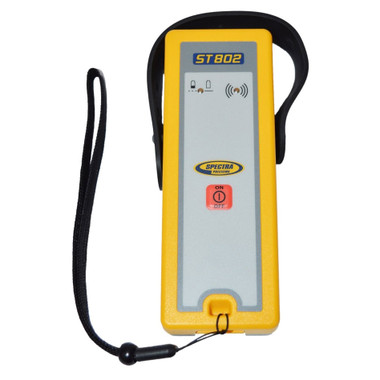
ST802 Signal Transporter
Extends the radio range between laser, remote and receiver. $212.00
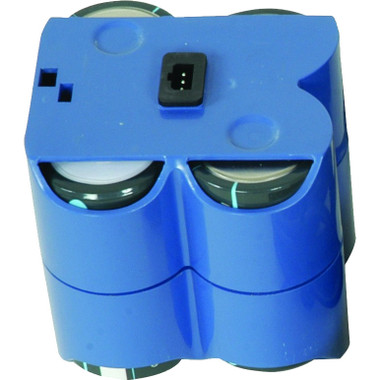
Q104667 Spare NiMH Pack
A second pack in the truck means a dead battery never ends the day. $149.95
Not sure which package fits?
Tell us what you are grading, how far you shoot and who is on the rod. We will tell you which GL622N package fits, and whether you need the signal transporter or a tilting base, before you spend a dollar. Family owned. Ships same day when you order by 12 noon Central.
Compare the packages
SPECTRA GL622N DUAL SLOPE LASER PACKAGES - Component Comparison
Swipe the chart sideways to see every column. Prices are live.
| Package | Receiver | Remote | Rod | Tripod | Price |
|---|---|---|---|---|---|
| GL622N | HL760 | RC602N | — | — | $3,128.00 |
| GL622N-1 | (2) x HL760 | RC602N | — | — | $3,275.00 |
| GL622N-14 | CR700 (machine or rod) | RC602N | — | — | $3,230.00 |
| GL622IR | HL760 | RC602N | — | — | $3,408.00 |
| GL622N-NR | HL760 | No remote | — | — | $2,895.00 |
| GL622N-17 | HL760 | RC602N | Feet/10ths | ALQR20 tripod | $3,185.00 |
| GL622N-27 | HL760 | RC602N | Feet/Inches | ALQR20 tripod | $3,185.00 |
| GL622N-19 | HL760 | RC602N | Feet/10ths | FGC20 elevator tripod | $3,295.00 |
| GL622N-19 | HL760 | RC602N | Feet/Inches | FGC20 elevator tripod | $3,295.00 |
| GL622N-BL | None | None | — | Laser only | $2,825.00 |
| GL622N-BCC | None | None | — | Laser + case, no receiver or remote | $2,885.00 |
Every package includes the case, NiMH battery pack and charger, except GL622N-BL (laser only) and GL622N-BCC (laser and carrying case only).
Models Obsolete - DISCONTINUED - Direct Substitution
The original GL622 packages. They are still listed, and the last column is the current GL622N package to order instead.
Compare the series
GL612N vs GL622N
The GL612N has been discontinued. The GL622N is the current dual grade laser.
Swipe the chart sideways to see every column.
| GL612N DISCONTINUED | GL622N | |
|---|---|---|
| Slope | Single grade | Dual grade (Y and X) |
| Grade range | ± 25% (Y axis) | ± 25% (Y and X axes, one at a time) |
| Automatic Axis Alignment | No | Yes |
| PlaneLok and Grade Match | Y axis | Y or X axis |
| Leveling accuracy | 1/16 in. @ 100 ft | 1/16 in. @ 100 ft |
| Self-leveling range | ± 14 degrees | ± 14 degrees |
| Working diameter | 2,600 ft | 2,600 ft |
| Laser | 639 nm, Class 2 | 639 nm, Class 2 |
| Warranty | 5 years | 5 years |
Straight answers
Spectra Precision GL622N-19 - Straight Answers.
What comes in the Spectra Precision GL622N-19 package?
This package includes the GL622N dual grade laser, the RC602N radio remote control, the HL760 laser receiver with C70 rod clamp and 105516 vertical adapter, a 15-ft aluminum grade rod in feet and tenths, a SitePRO FGC20 composite elevator tripod, a Q104667 NiMH rechargeable battery pack, a Q104781 worldwide charger, a small carrying case, the operating manual and a 5-year warranty.
What if I forget to charge the battery pack?
The GL622N runs on four D-cell alkaline batteries as a backup, about 40 hours, so a dead pack does not end your day. The NiMH pack is rated about 35 hours and can be charged inside or outside the laser. Alkaline batteries are not included.
How far does the GL622N work?
With a receiver the working diameter is about 2,600 feet (800 m). The RC602N remote reaches up to 490 feet (150 m) from the laser, and the HL760 receiver talks to the laser from up to 330 feet (100 m).
What is PlaneLok?
PlaneLok locks the laser beam onto an HL760 receiver that you mount at a fixed elevation point up to 330 feet (100 m) away. The laser keeps servoing to the receiver, which takes drift and weather out of the setup. It works in both horizontal and vertical setups.
What is Grade Match?
Grade Match measures an existing grade between two known points up to 330 feet (100 m) apart. Place the HL760 at the second point, start Grade Match, and the laser and remote display the measured grade value.
What is Automatic Axis Alignment?
On the GL622N the laser can electronically turn its grade axis to point at an HL760 placed on the direction hub, so you do not have to rotate the laser on the tripod. Sight the laser roughly at the receiver (within 40 degrees) and the laser does the rest. It works on one axis at a time, up to 330 feet (100 m).
Is a dual grade laser the same as a dual slope laser?
Yes. Dual grade and dual slope mean the same thing: a rotary laser that can slope on two axes, X and Y, one axis at a time. The Spectra Precision GL622N is a dual grade (dual slope) laser with a grade range of plus or minus 25% on both axes, and the GL622N-19 package adds the receiver and accessories listed above.
Is the GL622N a Class 2 laser?
Yes. The GL622N is a Class 2 laser at 639 nm (IEC 60825-1:2014). Never look into the beam.
Can I use the GL622N vertically?
Yes. The laser self-plumbs in the vertical position, and PlaneLok, Mask mode and Line Scan are available when it is set up vertically. The 105516 vertical adapter for the HL760 is in the package.
How do I pair the HL760 receiver with the laser?
On the laser, open Settings and then Pairing. On the HL760, hold the Deadband and Audio buttons for two seconds, pick RDIO, set it to LS, then choose PAIR. The laser pairs automatically. A laser and receiver can be paired with up to two receivers and two remotes.
How tough is the GL622N?
It is rated IP67 for dust and water and withstands a 3-foot (1 m) drop onto concrete. The operating range is -4 to 122 degrees F.
How long is the warranty?
Spectra Precision warrants the GL622N for 5 years. The HL760 receiver carries a 3-year warranty. Calibration is not covered, so check it periodically. Call us any time and we will walk you through it.
Spectra GL622N downloads
The manufacturer documents, with our phone number on every one.
GL612N / GL622N User GuideFull operating manual, 23 pagesOpen the PDF GL6X2N Hands-On TrainingSpectra's step-by-step setup deckOpen the PDF GL612N / GL622N Datasheet, page 1Features, applications, benefitsOpen the image GL612N / GL622N Datasheet, page 2Full specifications for the laser, remote and receiverOpen the image Authorized Spectra Dealer
Call 1-877-866-5721
Family owned and operated. We set these systems up every week — tell us the machine and the laser you are running and we will spec it before you order.
Experience the value of Great Customer Service!


-
5 Phenomenal
Posted by Landon on 30th Mar 2021
Great laser. Performs exactly as it should. Remote works great too. Very easy to change your slope from the cab of your machine. Grade rod receiver is very easy to use and has lots of useful information on the screen.
The grade rod itself is great. Easy to extend and retract. Sturdy and easy to read.
The tripod is great. Light, relatively short, good looking, and the telescopic laser mount is very handy.
Overall I could not be happier and combined it's all a great deal to boot.
Kevin, the owner, was extremely helpful in acquiring these products. Very responsive. Will absolutely do business with again.
Thank you for everything!
categories: