


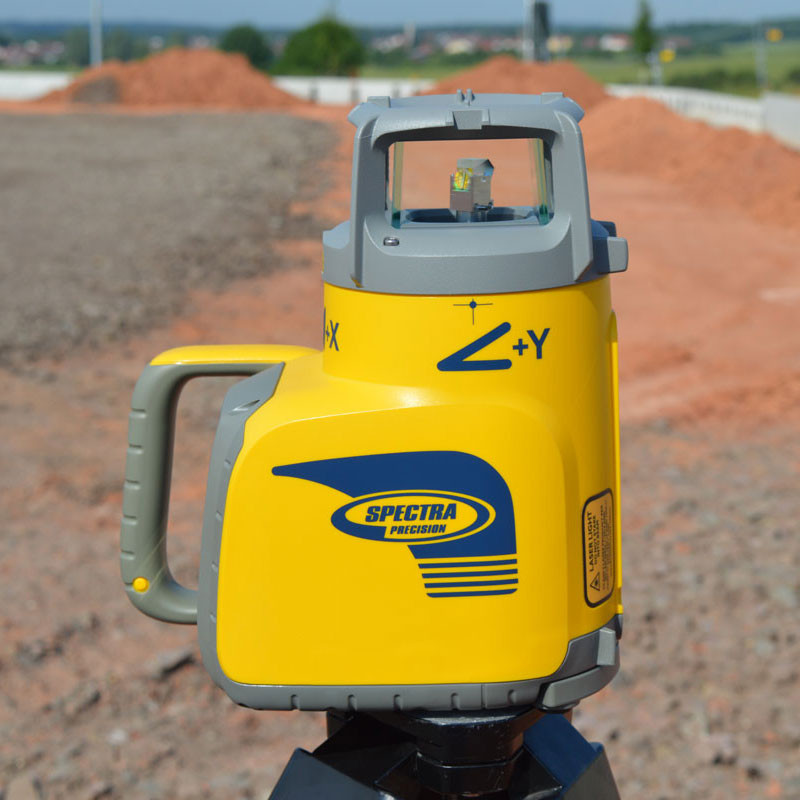
SPECTRA PRECISION GL622IR DUAL GRADE INFRARED LASER
Invisible Class 1 infrared dual-slope laser for railway, mining and restricted sites, with HL760 receiver and RC602N remote
Includes HL760 receiver with C70 clamp, RC602N remote, NiMH battery pack and case
A grade laser with no visible beam, for sites where a visible beam is not allowed.
 Authorized Dealer
Overview
When a visible laser beam is not allowed, this is the laser
An infrared rotary laser does the work of a red-beam grade laser without a beam anyone can see. A compatible receiver detects it and tells you above, below or on grade.
Railroad work
Some active rail lines do not allow a visible red beam. This is the best-documented use.
Mining
Some mines limit visible beams. The mine operator's rules and equipment approvals decide.
Restricted sites
Industrial facilities and contracts can set their own no-visible-beam rules.
The rule comes from the site, not from a federal law. No general U.S. rule requires infrared rotary lasers, so confirm the equipment rules with the railroad, mine, airport or facility safety authority before you order. Details by industry, what the regulations say, and straight answers are further down this page.
Who uses it | What the rules say | Questions | Read the full guide: When you need an infrared rotary laser
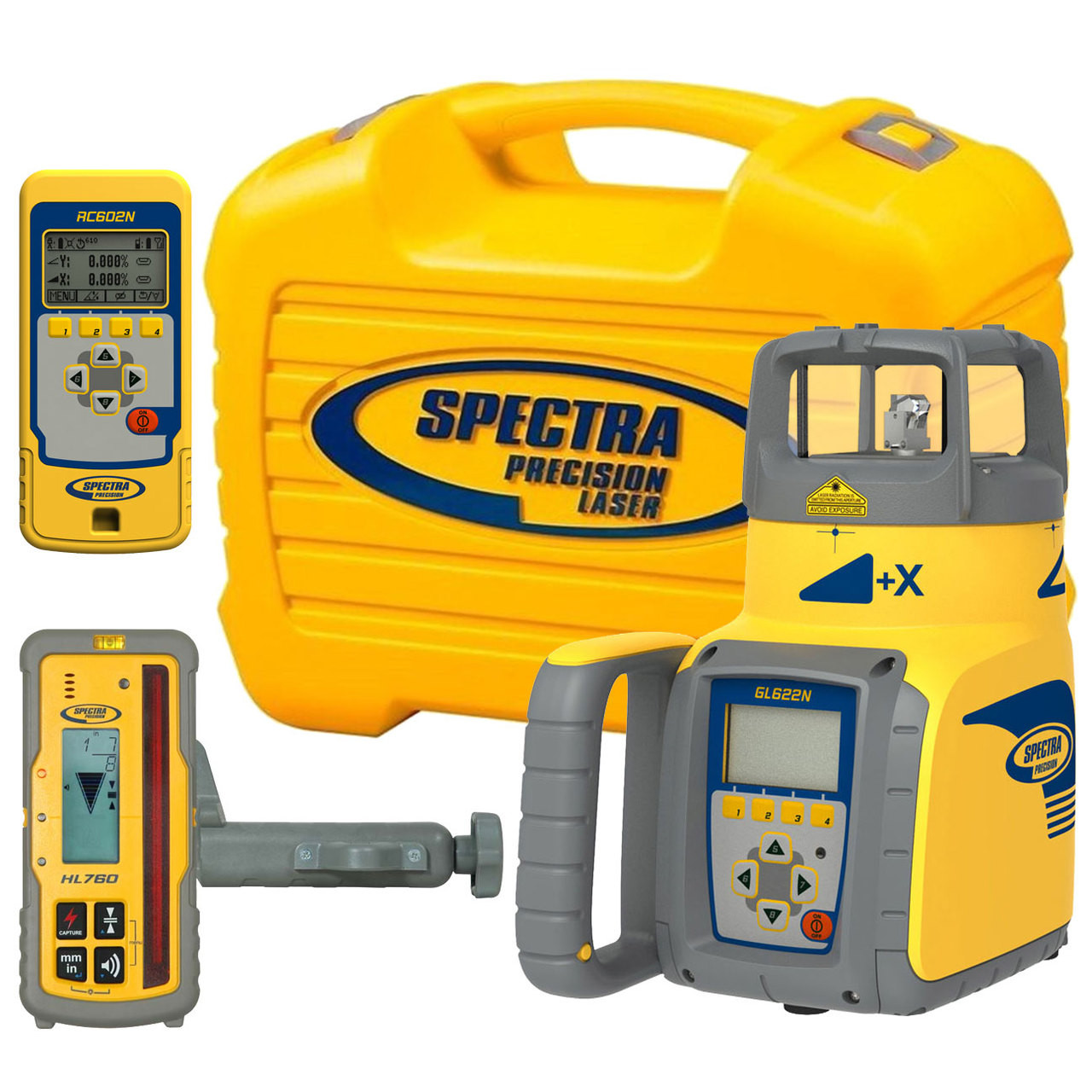
Spectra Precision GL622IR Laser Package INCLUDES
 CLICK TO ENLARGE
- GL622IR Dual Grade Infrared Laser Transmitter
- RC602N Radio Remote ControlFull-function two-way remote, 2 x AA
- HL760 Laser Receiver (Laserometer)Digital readout of elevation, 5 in. reception height
- Rod Clamp for Receiver C70
- 105516 Vertical Adapter for HL Receiver
- Rechargeable NiMH Battery Pack (Q104667)Can also be powered by alkaline batteries as a backup power source.
- Worldwide Charger (Q104781)
- Carrying Case
- Operating Manual
- 5-Year Warranty
Who uses it
Who needs an infrared laser, and why
Most grade lasers throw a bright red beam. On some sites, that beam is the problem. The GL622IR is the same dual grade laser with an invisible infrared beam instead.
Railway work
The best-documented use. On some active rail lines the railroad operator does not allow a visible red beam, and an infrared grade laser gives you trackbed, ballast and drainage grades without one. The requirement comes from the railroad or the project spec, not from a federal rule, so check yours first.
Mining
Some mines limit visible beams where they distract or where site rules say so. The mine operator's rules and equipment approvals decide. A Class 1 laser is not automatically approved for hazardous or potentially explosive underground atmospheres.
Any site that says no visible beam
Some industrial facilities and contracts set their own visible-light or laser rules. If yours says no visible beam, this is the dual grade laser built for it. Ask the site safety authority, then call us.
Also chosen when you simply do not want a visible beam
Not a requirement here, a preference: airport and airfield work (airport authority approval still governs), highway and heavy civil grading, heavy earthmoving, municipal water, sewer and storm drainage, land leveling and sports fields.
Not sure your site needs one? Call 1-877-866-5721. If a visible beam is allowed, the red-beam GL622N is the same laser, and we will tell you which fits.
Benefits for these applications
Why the GL622IR for rail, mining and restricted sites
Class 1: the lowest-hazard laser class
Spectra rates the infrared beam Class 1, the lowest-hazard laser classification. Normal laser safety rules and your site procedures still apply: an invisible beam is not automatically harmless.
Nothing visible to distract anyone
No bright red beam crossing the work area, so there is nothing to catch an eye or pull attention from the job.
Full dual-slope grade control
Plus or minus 25% on both axes, one axis at a time, self-leveling across about 14 degrees, and 1/16 in. at 100 ft leveling accuracy.
One person, a long way out
A 2,600 ft working diameter with the receiver, and the RC602N remote changes grade and runs the automatic functions from up to 490 ft.
Built for hard sites
IP67 dust and water sealing, a 3-foot drop onto concrete, and a working range of -4 to 122 degrees F. Five-year warranty.
Everything is in the box
The HL760 receiver with C70 clamp, the RC602N remote, a NiMH battery pack, charger and carrying case ship with it.
In the field
Working with a beam you cannot see
The HL760 in the box does the seeing
You cannot see an infrared beam on a rod or a target. The HL760 that ships with the GL622IR detects it and shows above, below or on grade, with a 5-inch catch window and a beeper you can hear across the site. If you want to run a different receiver with this laser, call us first.
Grade and level, not vertical
The GL622IR is not used for vertical alignment or 90-degree layout. For plumb and vertical work, use the red-beam GL622N.
Call before you order
Tell us the application and the site rules. We will confirm the GL622IR is the right laser before you spend a dollar. Family owned, ships same day when you order by 12 noon Central.
Infrared or red beam?
| GL622IR Infrared | GL622N Red | |
|---|---|---|
| Beam visible to workers | No | Yes |
| Receiver needed to find the beam | Always | Usually outdoors |
| Laser class | Class 1 | Class 2 |
| Dual grade, plus or minus 25% | Yes | Yes |
| Vertical alignment and 90-degree layout | Not used | Yes |
| Best for | Restricted or specialized worksites | General construction |
Infrared does not by itself give more accuracy or range than a red beam. Always confirm equipment rules with the railroad, mine, airport or facility safety authority before you order.
The laser
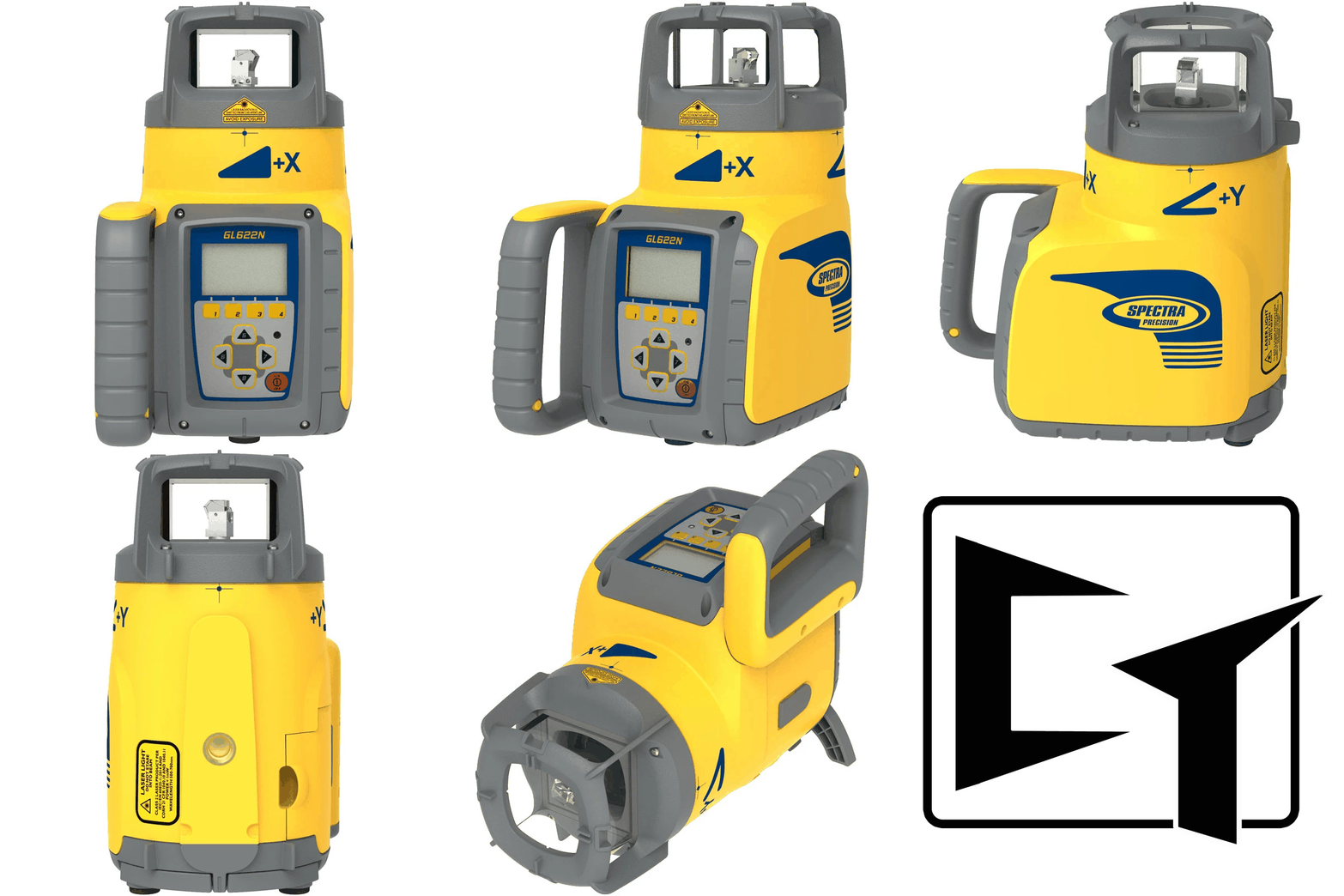
Spectra Precision GL622IR: one laser, two axes
The Spectra Precision GL622IR is a dual grade laser, also called a dual slope laser: it grades up to ± 25% on the Y axis and the X axis, one axis at a time, and self-levels electronically across a ± 14 degree range. An intuitive keypad and graphic display put every grade and alignment function a few presses away.
The HL760 receiver and the RC602N remote in this package talk to the laser by radio. That link is what unlocks Grade Match, PlaneLok and Axis Alignment. Working diameter is about 2,600 feet with the receiver. Three rotation speeds (300, 600 and 750 rpm), a Class 1 infrared beam, IP67 sealing, a 3-foot drop onto concrete and a 5-year warranty from Spectra Precision round it out.
Features and benefits
What the GL622IR gives you
Ten reasons the GL622IR earns its place on the jobsite, from Spectra Precision's own feature list.
Multiple applications
One dual slope laser, level and grade
Control level, alignment and dual grade from one laser, with an invisible Class 1 beam.
Long range
One person, a 2,600 ft working diameter
One-person elevation and grade control across an 800 m (2,600 ft) diameter increases productivity.
Automatic self-leveling
Fast, easy setup
Horizontal level and grade set themselves up. Roughly level the head and the laser does the rest, across about +/-14 degrees.
Automatic Grade Matching
Find the grade that is already there
The laser moves to the on-grade position on the receiver on its own by talking to it wirelessly, and the grade is calculated. Ideal when a constant fall is wanted but the grade is not known: renewing existing driveways or matching existing surfaces.
Grade range
Fully compensated, -25% to +25%
A large, fully compensated grade range keeps the laser leveled no matter what grade you dial in, which cuts errors and improves productivity.
Anti-vibration filter
Tall tripod? High wind? Keep working
Vibration and strong wind affect a laser, especially on a tall tripod. The anti-vibration filter can be set to the conditions, so work continues regardless of wind or excessive vibration.
Rugged
A 3-foot drop. A 5-foot pushover.
Withstands a 1 m (3 ft) drop directly onto concrete, or a 1.5 m (5 ft) pushover on the tripod, eliminating costly repairs.
PlaneLok
Locks out temperature error
Keeps the laser beam fixed to the receiver in a set position, eliminating errors caused by fluctuating temperatures and keeping the laser accurate and error free.
Automatic Axis Alignment
Do not let a misaligned axis cost you
Alignment to the grade hub is critical when working with grade. If it is off, the error is introduced and exaggerated. Axis Alignment lets you set up simply and quickly, maintaining accuracy and eliminating costly errors. GL622IR only.
Mask Mode
Switch the beam off where you do not want it
A virtual masking function turns the beam off on up to 3 sides, avoiding false readings from glass reflections and interference with other lasers on the same jobsite.
What the laser does
Run the whole job from one setup
The GL622IR does the work that usually takes a second laser, a second person or a lot of walking.
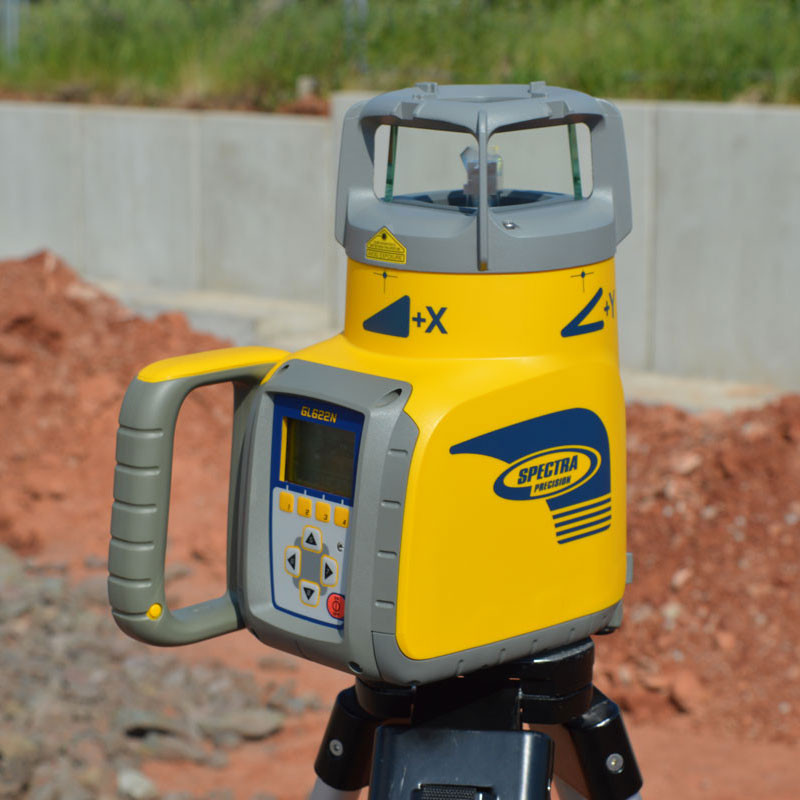
AXIS ALIGNMENT
Point the slope where you need it. Do not touch the tripod.
Set the HL760 on your direction hub, aim the laser roughly at it (within 40 degrees) and press go. The GL622IR electronically turns its grade axis to the receiver, the same result as rotating the laser on its base. Sports fields, parking lots, driveways, any field where the slope is not square to the setup. GL622IR only.
Works one axis at a time, up to 330 ft.
PLANELOK
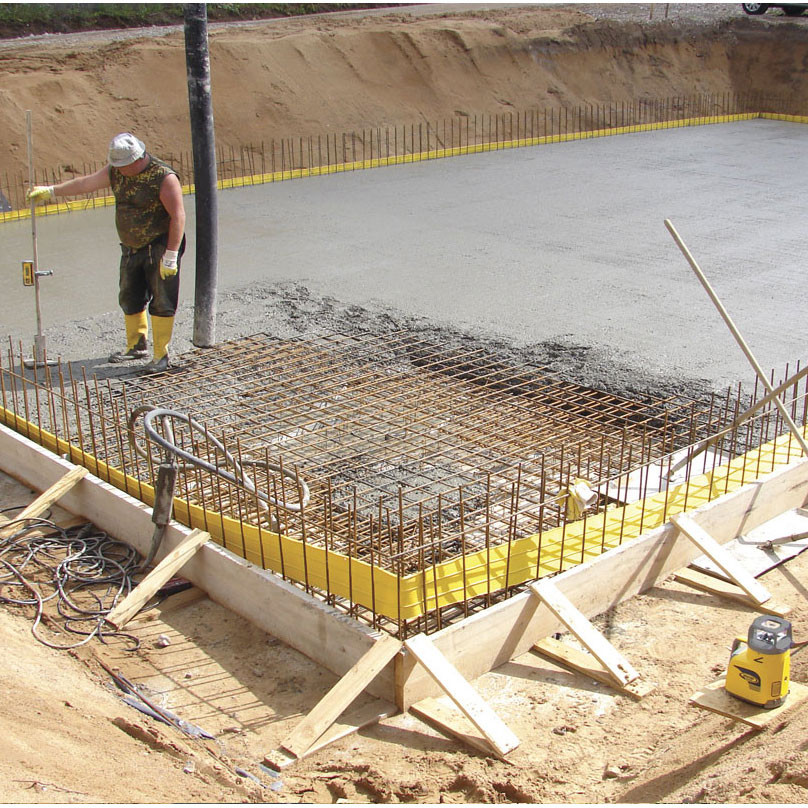
Lock the beam on grade and walk away.
Mount the HL760 at your benchmark. PlaneLok servos the beam onto it and keeps it there, up to 330 feet. Pour a slab or set forms to a fixed point without re-checking the setup. It also removes beam drift from vibration and changing temperatures through the day, which is why it is the setting for concrete pads. If the beam gets blocked for a minute the laser alerts you, so you never work off a lost lock.

GRADE MATCH
Find the slope that is already there.
Put the laser at one point and the receiver at the other, up to 330 feet apart. The GL622IR measures the existing grade and shows it on the laser and the remote. Match a driveway, a pipe run or a curb. No on-grade stakes, no math.
STEEP SLOPES
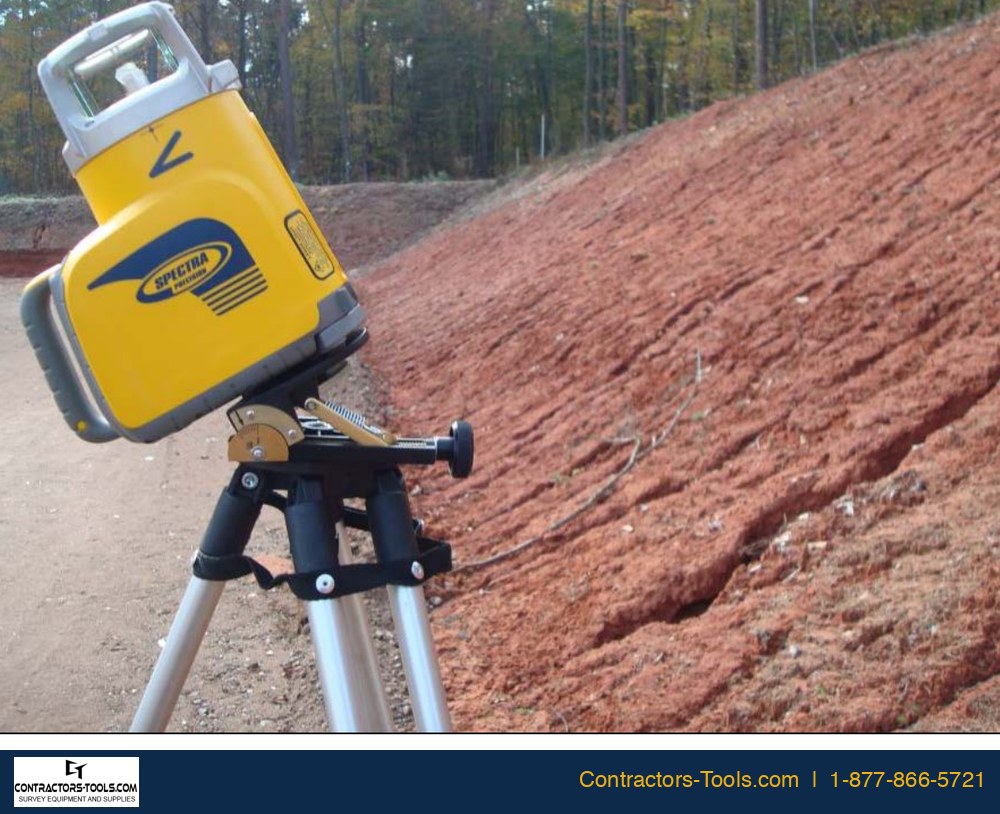
Grade steep slopes without guessing.
Set the laser at the bottom of the slope on the M401 tilting base, tilt it until the receiver at the hub catches the beam, then start PlaneLok. The laser locks onto the hub and holds it. This is Spectra's own steep-slope procedure, and the M401 is $156.95.
Hands-on
Set up and grade in four steps
1. Power it up. The laser ships with the Q104667 NiMH pack. Charge it inside or outside the laser with the Q104781 charger, or run four D-cell alkalines as a backup. Hold the ON/OFF button for one second to turn the laser on.
2. Let it check itself. The laser runs a temperature and reference check, then the bubble symbols flash until it has self-leveled. Do not start a menu function before the check is finished.
3. Dial in the grade. Press the grade-entering button, type the X and Y values (Digit Select, or Step and Go), and confirm. The laser self-levels to the grade and the bubbles flash until it is there.
4. Pair and go. The RC602N and the HL760 pair under Settings. Once paired you can change grade from the remote and use the automatic functions below.
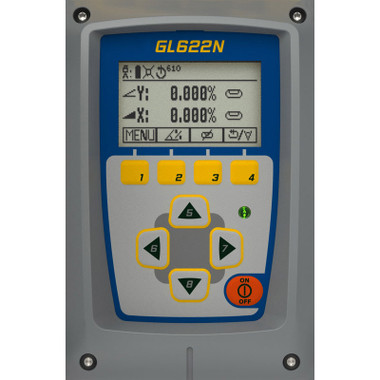
Automatic functions
PlaneLok, Grade Match and Axis Alignment, step by step
PlaneLok: lock the beam to a fixed elevation
A radio in the laser and the receiver keeps the beam locked to a fixed elevation. The laser works to hold the beam in one position on the receiver. That improves accuracy and suits work that demands it, such as concrete pads, and it removes beam drift caused by vibration or changing temperatures through the day.
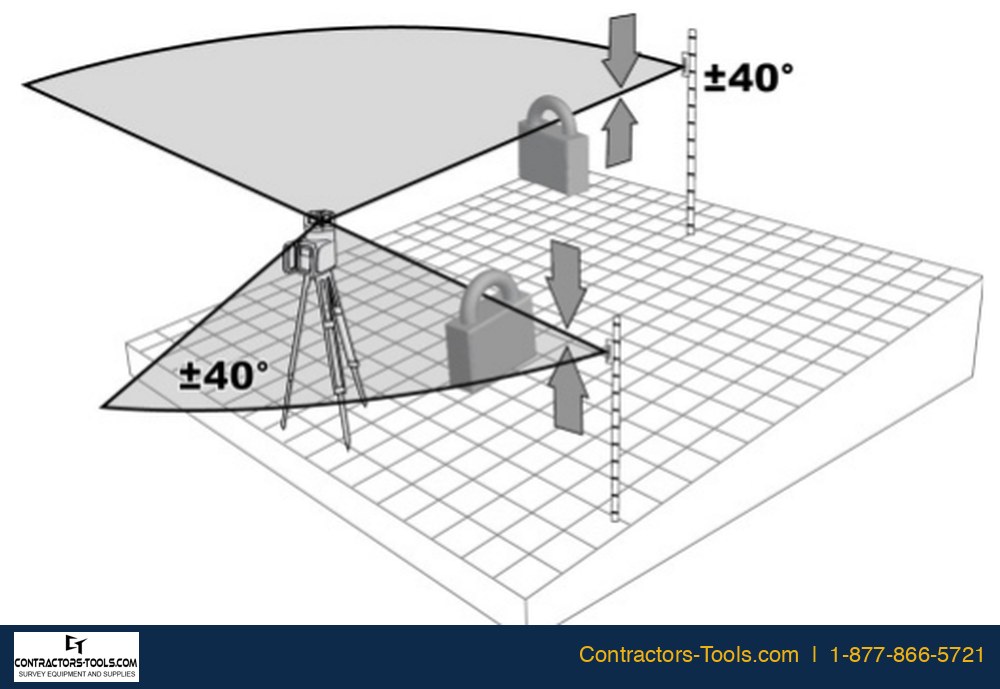
Set up: set the laser over the reference point and mount the HL760 on a grade rod at the second point, on grade. Turn the laser on the tripod until it is roughly aimed at the receiver (alignment range is +/-40 degrees on both axes). Press MENU, choose PlaneLok, choose the axis and press button 4. The laser searches for the receiver, then the lock symbol goes solid and the HL760 stops flashing -PL-. Press ESC (button 3) to exit. If the beam is blocked for a minute an alert appears and you restart PlaneLok. For batter boards, Spectra lists the M402 adapter.
Grade Match: measure an existing grade
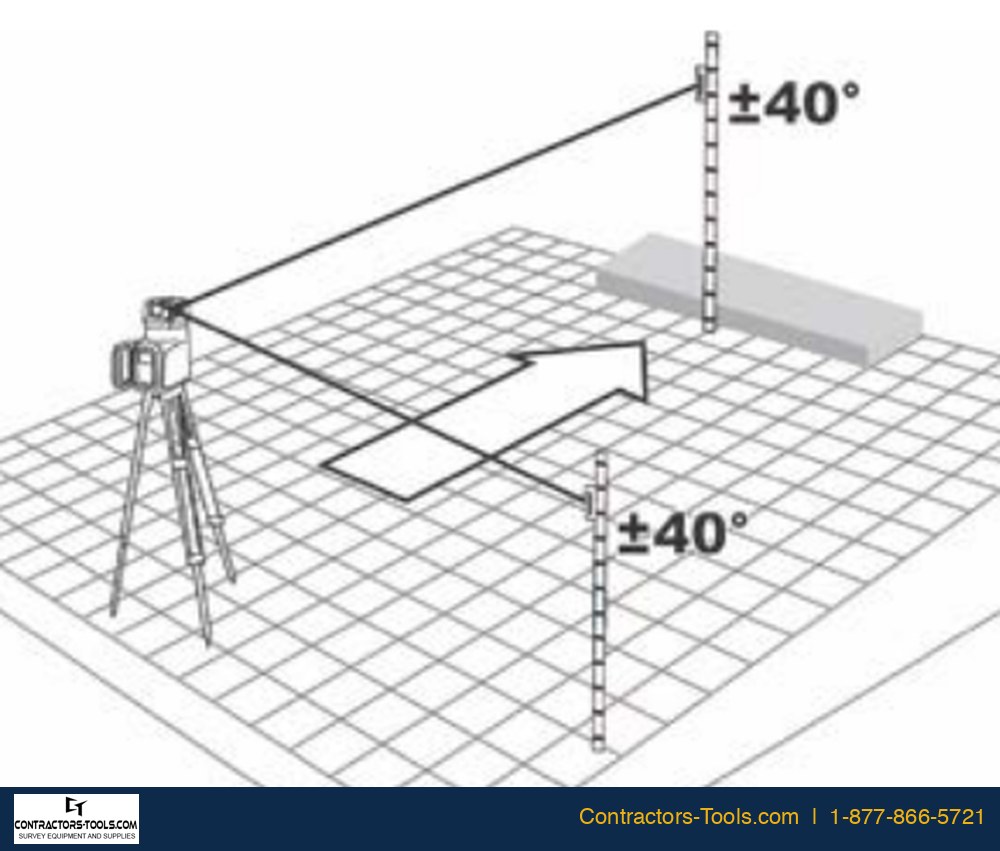
Set up: set the laser over the reference point. Check the laser elevation next to it, then position the HL760 at the second point WITHOUT changing the receiver height on the rod. Aim the laser roughly at the receiver (+/-40 degrees), press MENU, choose Grade Match, choose the axis and start. The HL760 flashes -GM-, and when it is done the laser and the remote show the measured grade value. If the limits are exceeded you get a Grade Match Failed message.
Axis Alignment: point the grade axis at a hub (GL622IR only)
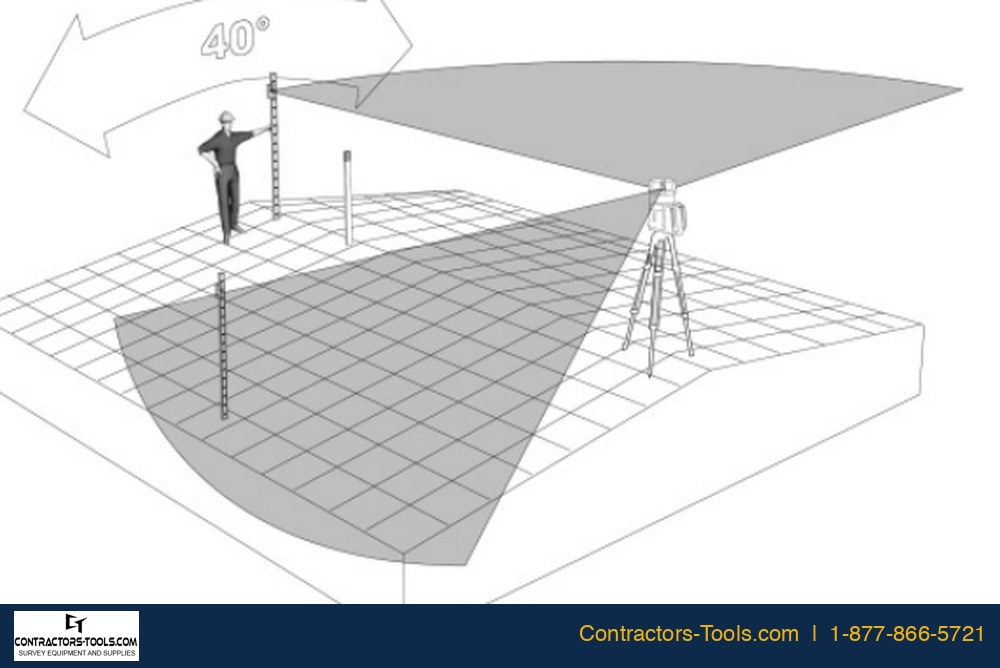
Set up: set the laser over the reference point and place the grade rod with the HL760 at the direction hub, up to 330 ft (100 m) away. Aim the laser roughly at the receiver, put the receiver in the beam to save time, press MENU, choose Axis Align, pick the axis and press button 4. The HL760 flashes -AA- while the laser aligns, and a short line over X or Y confirms it is done.
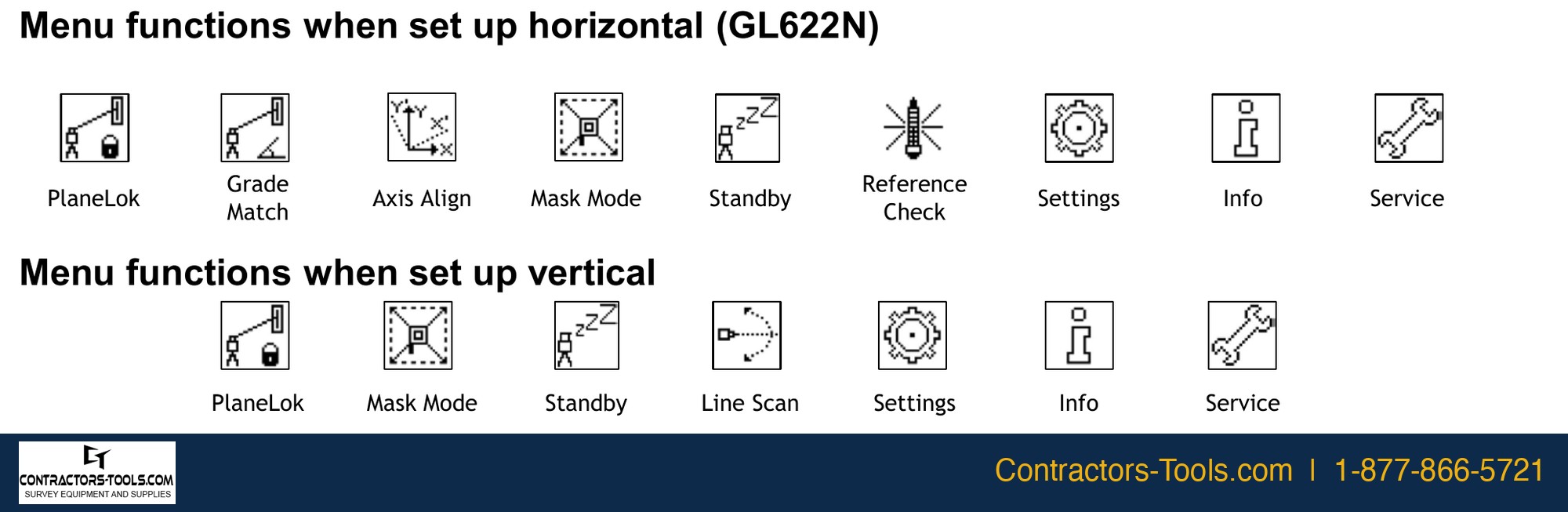
Mask mode and Standby
Mask mode switches the beam off in the sectors you pick, so you do not interfere with other crews. It is cleared every time the laser is powered up. Standby stops self-leveling and turns the beam off while the HI alert stays active.
Settings you will actually use
Grade display in percent, per mille or degrees. Sensitivity (low, mid, high). HI-alert (5 minutes, 30 seconds or off). Password. RF channel 1 to 6 (re-pair after changing it). A user name that shows at power-up. Position info (latitude and altitude) for high grades. Menus in 14 languages.
Error codes and what to do
Code 120: HI alert, unit height changed, check beam elevation. 130: mechanical limit during Axis Alignment or Grade Match, move closer to the alignment point and check the slope is under 25%. 131: rake angle limit, pre-tilt the unit closer to the alignment point. 140: beam blocked, clear the path to the receiver. 141: alignment timed out, check radio range and a stable setup. 150: no receiver, make sure it is on and paired. 152 / 153: receiver not found or lost, check the range and restart. 160 or 21: contact service (21 can be cleared by repeating pairing and re-entering your settings). Any message clears with a short press of button 4.
Laser specifications
Spectra Precision GL622IR Laser SPECIFICATIONS
| Leveling accuracy | ± 0.5 mm / 10 m, 1/16 in. @ 100 ft (10 arc seconds) |
| Grade accuracy | ± 1.0 mm / 10 m, 1/8 in. @ 100 ft (20 arc seconds) |
| Grade range (Y and X) | ± 25% on both axes, not at the same time |
| Self-leveling range | approx. ± 14 degrees |
| Working diameter (with receiver) | approx. 2,600 ft (800 m) |
| Rotation speed | 300, 600 and 750 rpm |
| Laser | Infrared, invisible beam, Class 1 |
| Radio range, remote (RC602N) | up to 490 ft (150 m) |
| Radio range, receiver (HL760) | up to 330 ft (100 m) |
| Power | NiMH rechargeable pack or 4 x D alkaline batteries |
| Battery life | 35 hours NiMH, 40 hours alkaline |
| Dust and water | IP67 |
| Operating / storage temperature | -4 to 122 F / -4 to 158 F |
| Tripod mounts | 5/8 x 11, horizontal and vertical |
| Weight | 6.8 lb (3.1 kg) |
| Warranty | 5 years |
Source: Spectra Precision GL612N/GL622N datasheet and user guide. Accuracy and range are measured at 21 °C along the axis under optimal atmospheric conditions.
The receiver in the box
The HL760 is what makes this kit better
Every GL622IR package comes with the HL760 and its C70 rod clamp, both in the box: a digital-readout receiver with a 5-inch catch window, a number that tells you how far off grade you are, a beeper you can hear across the site, a body that survives a 10-foot drop onto concrete, and a built-in radio that talks to your laser. It is not an accessory. It is half of what makes the GL622IR work.

BIGGEST WINDOW
5-inch reception height
The largest reception height of any rod-mounted receiver. Catch the beam sooner, read it from anywhere in the window, and stop sliding the receiver up and down the rod.
ARMORED ALL AROUND
Drop it. Drop it again. It keeps working.
Rubber armor wraps the whole case: top, sides and bottom. Rated for a 10-foot (3 m) drop onto concrete. Toss it, drop it, it takes a beating and keeps on measuring.
KEEP ROLLING
Drop it in the creek. Keep going.
IP67: dust-tight and sealed against immersion. A puddle, a creek, a bucket of concrete: rinse it off with the hose and keep working.
IN THE BOX
The C70 rod clamp comes with it.
The HL760 ships with the C70 rod clamp with bubble vial, so it goes straight onto your grade rod, round, oval, square or rectangular. Mount it in the standard or the offset position (the receiver detects which).
The receiver takes more abuse than anything else in the system. It rides the rod, gets set down in the dirt, knocked over and dropped, all day, every day. That is why it is built tough: rubber armor on every side, an IP67 seal and a 10-foot drop rating, made to last in demanding conditions.
SMART READINGS
It does the math. You read one number.
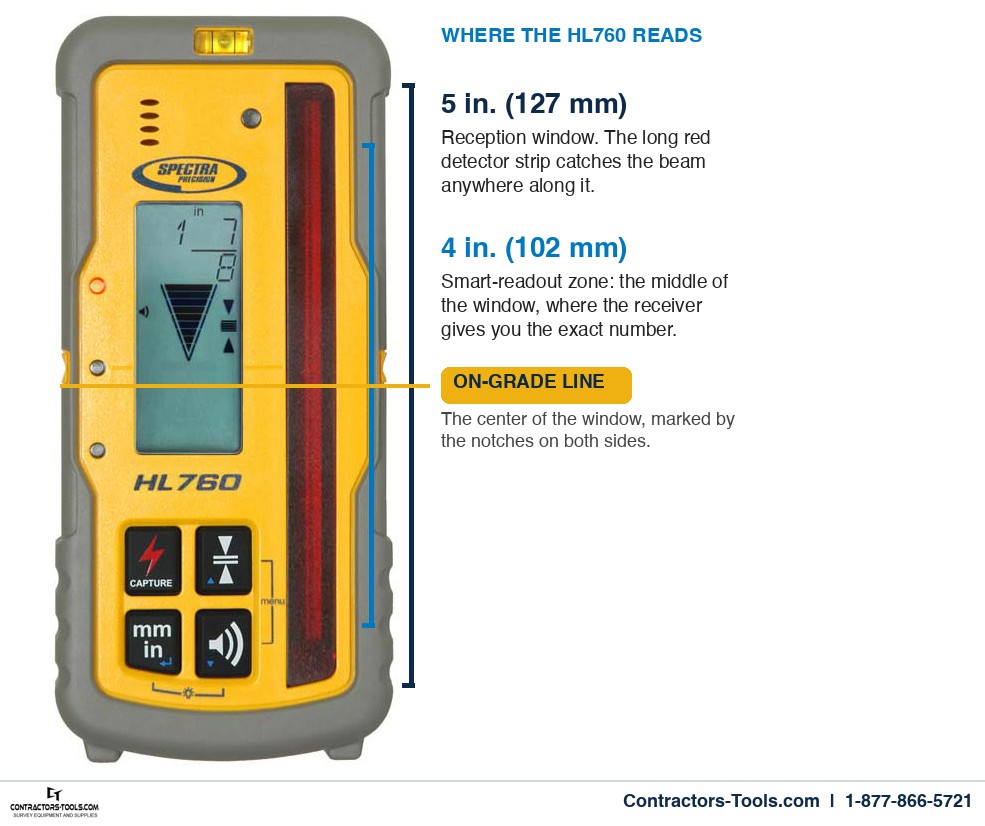
Instead of sliding the receiver up and down the rod to find on-grade, the HL760 tells you exactly how far above or below grade you are, as a number, in the middle 4 inches (102 mm) of its 5-inch window: 2 inches above grade and 2 inches below. Four ways to read it, all at once:
Where it reads, and what you see on the receiver
The long red detector strip is the 5-inch reception window. The numeric readout works in the middle 4 inches of it. Here are two real HL760 faces, in two different units:
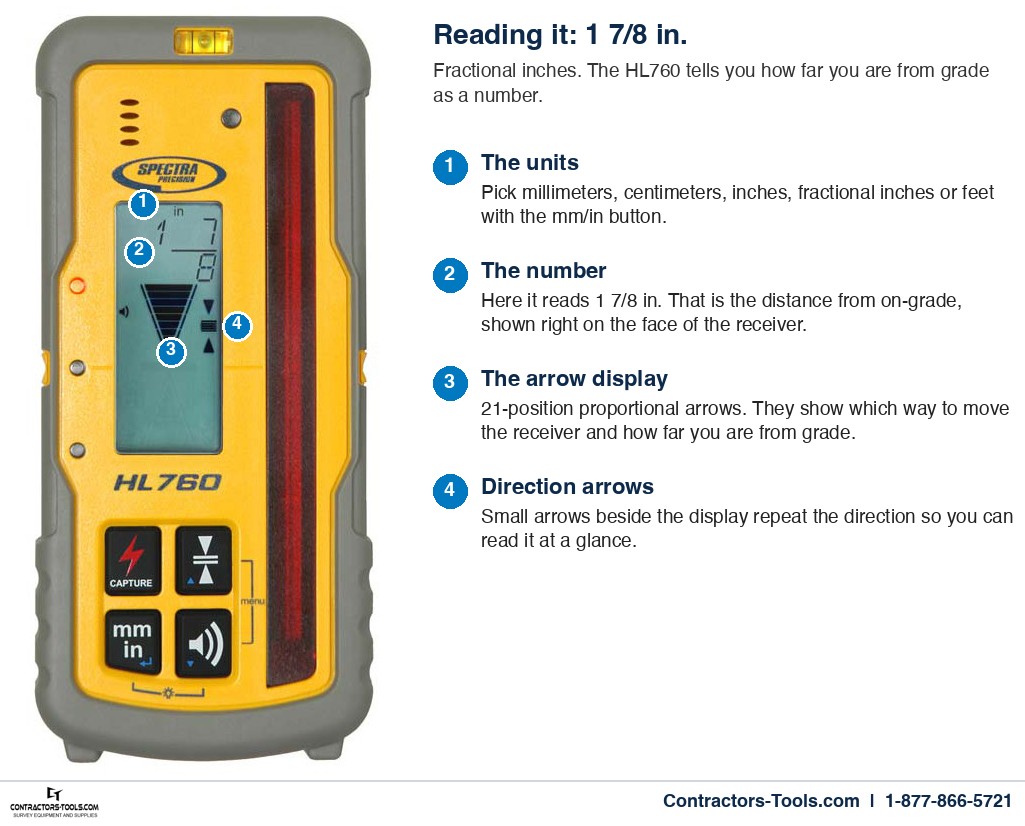
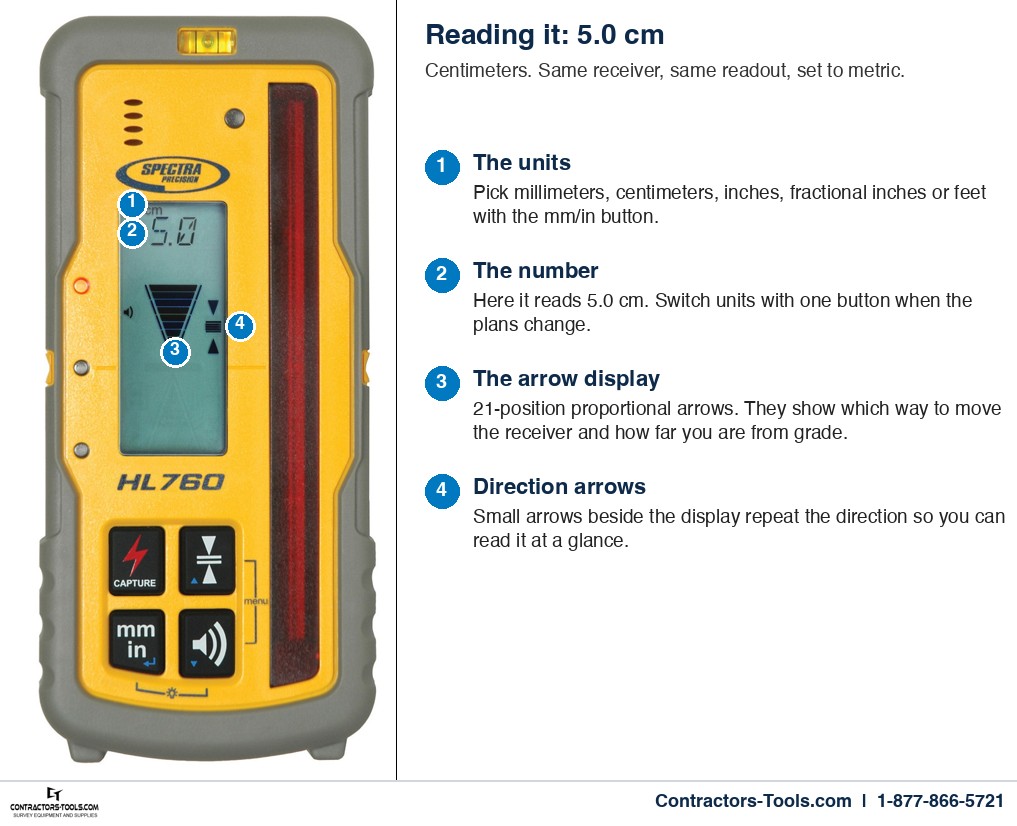
Pick the units that match your plans and your rod
- Millimeters
- Centimeters
- Inches
- Fractional inches
- Feet
Fraction reduction can be switched on so 4/8 in. reads as 1/2 in., or left off when you are checking surface flatness and want the same denominator every time.
Five accuracy settings, in every unit
| Setting | Millimeters | Decimal inches | Fractional inches | Good for |
|---|---|---|---|---|
| Ultra Fine | 0.5 mm | 0.02 in. | 1/32 in. | Finish concrete, forms, fine surface work |
| Super Fine | 1.0 mm | 0.05 in. | 1/16 in. | Forms and flatwork |
| Fine | 2.0 mm | 0.10 in. | 1/8 in. | General grade checks |
| Medium | 5.0 mm | 0.20 in. | 1/4 in. | Site prep and base |
| Coarse | 10.0 mm | 0.50 in. | 1/2 in. | Rough dirt work |
Tolerance is an accuracy setting on the receiver. Use a wider tolerance while moving dirt and a narrow one for concrete or other fine grade. Spectra receivers hold their tolerance accuracy over the receiver's full operating range, which, with the digital readout and the rugged build, helps accuracy. Go tight for forms and finish concrete, loose for rough dirt. The inch and fraction values are the receiver's own settings, not exact conversions of the millimeters. The clamp can sit in the standard or the offset position, and the HL760 detects which and shows an offset symbol; offset shows more grade information above grade, which helps when you are driving stakes down to grade.
Front and rear displays
Two LCDs, front and back, so whoever holds the rod or stands behind it can read the number. Optional backlight, and 60+ hours on two AA batteries (about 16 hours with the backlight on continuously).
Catch the beam sooner
A 127 mm reception height catches the beam sooner and holds it on a moving rod, so you stop hunting for the plane. The numeric readout covers the middle 4 inches of that window.
The loudest we sell
We tested the beeper against the other receivers we sell, and the HL760 is the loudest. It is also the one with the speaker on the front, facing the operator, so you hear it where you stand.
Fewer parts, fewer failures
Spectra builds the HL760 around a patented Light Bar detector, one continuous bar instead of an array of separate photocells. Fewer components and fewer solder joints is why Spectra can publish a 10-foot drop spec. Rated for -4 to 140 degrees F.
Strobe-proof
A patented anti-strobe sensor ignores the LED strobes and hazard beacons that fill a jobsite, so a passing truck does not give you a false reading. Pick high, medium or low sensitivity in the menu.
Reads the beam off-angle
It reads the laser at up to 45 degrees off axis, so a rod that leans or a receiver that is not square to the laser still sees the beam.
Reach
It picks up the laser from 3 feet out to a 1,500-foot radius, depending on the laser. With the GL622IR the working diameter is about 2,600 feet. The built-in radio talks to the GL622IR from up to 330 feet (100 m).
Talks to your laser
The built-in two-way radio is what switches on Grade Match, PlaneLok and Axis Alignment, and Fingerprint, which locks the receiver to your laser and rejects every other laser on the site.
Fits your rods, even your other lasers
The C70 clamp is in the box and fits round, oval, square or rectangular grade rods, in the standard or the offset position (offset helps when you are driving stakes down to grade). The HL760 also reads most red-beam rotary lasers from Topcon, Leica and other brands as a plain detector.
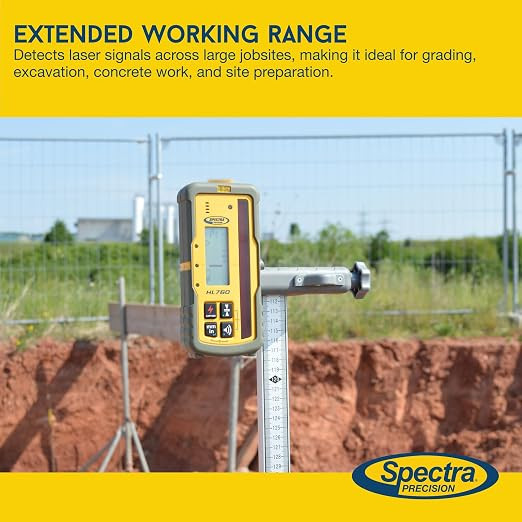
ON THE ROD, ON THE JOB
Check cut and fill in seconds, with one person.
Clamp the HL760 to the rod, hold it in the beam and read the number. Foundations, forms, footings, trench grade checks, driving stakes to grade, site prep. When a grade changes, the laser and receiver keep talking, so the plane stays where you put it.
How the HL760 stacks up
| HL450 | HL760 (in this kit) | CR700 | |
|---|---|---|---|
| Digital readout of elevation | Yes | Yes | Yes |
| Reception height | 4 in. | 5 in. | 5 in. |
| Accuracy levels | 3 | 5 | 6, including 25 mm machine |
| Working radius | 650 ft | 1,500 ft | 1,500 ft |
| Drop rating | 5 ft | 10 ft | 10 ft |
| Built-in two-way radio | No | Yes | Yes |
| Grade Match, PlaneLok, Fingerprint | No | Yes | Yes |
| Mounts on a machine (magnetic mount) | No | No | Yes |
HL760 specifications
| Rod clamp | C70 rod clamp with bubble vial, included (standard or offset position) |
| Digital readout units | mm, cm, in, fractional in |
| Reception height | 5 in. (127 mm) |
| On-grade sensitivities | Ultra Fine 0.5 mm, Super Fine 1 mm, Fine 2 mm, Medium 5 mm, Coarse 10 mm |
| Power | 2 x AA, 60+ hours continuous operation |
| Dust and water | IP67 |
| Weight | 9.5 oz (0.27 kg) |
| Warranty | 3 years |
Hear it. See it.

The Spectra HL760 is the loudest laser receiver we sell, and the only one of the four we tested with the speaker on the FRONT facing the operator. Here it is at max volume.
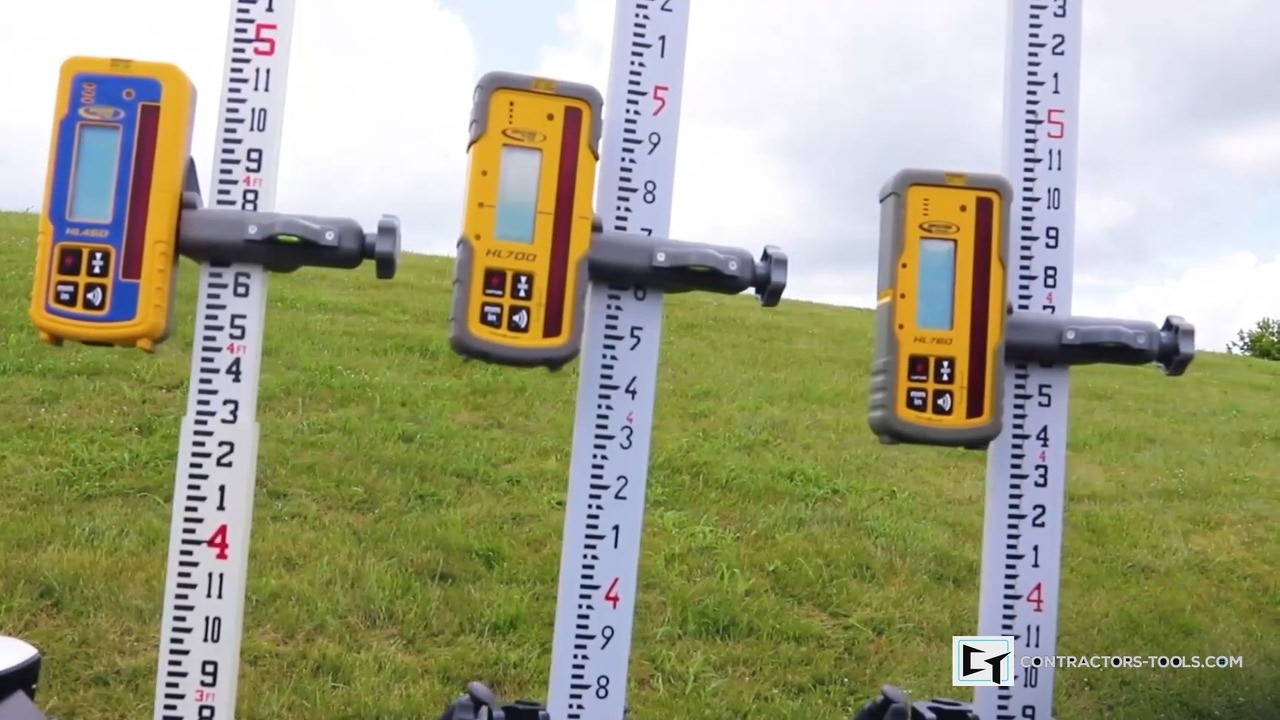
A numeric elevation readout tells you how far off grade you are without sliding the receiver up and down the rod. Here are the three Spectra receivers that do it.
Want the operator in the cab to read it too? Add a second HL760 and it becomes a wireless remote display, up to 260 feet from the rod. That is an extra receiver, sold separately ($416.00) and a bonus use, not what the HL760 is bought for. Watch how it pairs.
The remote in the box
The RC602N remote: run the laser from where you stand

Change the grade without walking back to the laser. The RC602N puts the laser in your hand from up to 490 feet away. Dial in a new slope, start an automatic function, read the display, and keep the crew moving. When the plan changes, you change the grade from where you are standing.
- Up to 490 ft radio range
- 130 hours on two AA batteries
- IP66 dust and water
- 0.57 lb (0.26 kg)
- Pairs with the laser by radio, up to two remotes per laser
Spare or second remote: RC602N radio remote, $279.95.
RC602N specifications
| Radio range to the laser | up to 490 ft (150 m) |
| Power | 2 x AA alkaline batteries |
| Battery life | 130 hours |
| Dust and water | IP66 |
| Weight | 0.57 lb (0.26 kg) |
The details
Where infrared is required, and where it is only preferred
Open an industry to see the applications and what decides whether an infrared laser is needed.
Railroad construction and maintenance
On some active railway lines, visible red laser beams are not permitted, and an infrared grade laser is the alternative that does not put a visible red light into the work environment. Common applications:
- Trackbed preparation and grading
- Ballast and subgrade elevation control
- Rail corridor drainage installation
- Railway crossings and access road construction
- Railroad yard construction and improvements
- Embankment grading and slope preparation
- Trackside utility and infrastructure installation
Requirement status: infrared equipment may be required by the railroad operator, the project specification or the worksite safety rules. There is no blanket requirement that all U.S. railroad construction projects use infrared rotary lasers.
Mining and specialized excavation
Certain mining operations may require equipment that avoids visible laser emissions, especially where visual distractions or site-specific safety restrictions have to be controlled. An infrared rotary laser gives an elevation and grade reference without a visible beam in the work area. Potential applications: mine access roads, excavation grades, pit drainage, haul-road construction and site preparation.
Requirement status: the mine operator's rules and the applicable mining equipment approvals decide whether an infrared laser can be used. A Class 1 infrared laser is not automatically approved for hazardous or potentially explosive underground atmospheres.
Restricted industrial facilities
Some facilities and contracts set their own visible-light or laser-use rules. An infrared grade laser can be useful during construction or maintenance where a visible beam should not add distractions: warehouse floor preparation, industrial foundations, equipment pads and large concrete work. Confirm the facility rules first.
Airports and airfields
Possible applications are runway and taxiway grading, apron construction and drainage. An invisible beam may avoid visible glare, but it is not automatically exempt from aviation safety requirements. Airport authority approval and applicable aviation safety rules still govern, and a beam that could enter navigable airspace has to be evaluated under FAA procedures.
Highway, heavy civil and earthmoving
Roadway subgrade, roadbed construction, highway drainage, paving and earthmoving. Infrared is normally a preference here, not a requirement. When crews already depend on electronic receivers, an invisible beam gives the same reference without a visible line. Machine control needs a receiver and configuration approved for the transmitter, so check compatibility before you buy.
Municipal water, sewer and storm drainage
Water-line trenches, storm drainage, sanitary sewer installations and utility corridors. An infrared rotary laser gives a grade reference for over-the-top pipe installation and excavation control. It is not a substitute for a dedicated pipe laser when the job needs an internal pipe alignment reference.
Agriculture, land development and sports fields
Land leveling, irrigation and drainage, sports field grading, parking areas, embankments and commercial site preparation. In these jobs infrared is an equipment preference, not a regulatory requirement.
What the rules say
No general rule requires infrared. Site rules can.
We read the regulations so you do not have to. None of them says every railroad, mine or construction site must use an infrared laser. What can require it is the operator or the contract.
| Authority | What it covers | Requires infrared? |
|---|---|---|
| OSHA 29 CFR 1926.54 | Construction laser operation, trained operators, exposure and safety controls | No |
| FDA 21 CFR 1040.10 and 1040.11 | Laser product classification and emission limits | No |
| FRA 49 CFR Part 214 | Railroad worker protection and on-track safety | No general infrared rule |
| MSHA and 30 CFR | Mining safety and electrical equipment approvals | No general infrared rule |
| FAA outdoor laser procedures | Beams that could affect aircraft or navigable airspace | No |
| ANSI Z136.1 and IEC 60825-1 | Laser safety practice and classification | No |
| Railroad or mine operator specifications | Site-specific permitted equipment and beam restrictions | Can require infrared |
Class 1 still needs safe practice. Select infrared rotary lasers carry a manufacturer-specified Class 1 classification. OSHA's construction laser rule still applies on the job: trained operators, warning placards, and no beam directed at employees. Class 1 is model-specific, it is not automatic for every infrared transmitter, and invisible radiation is not harmless by default. Read the manufacturer's safety instructions.
References: OSHA 1926.54, FDA 21 CFR 1040, FRA 49 CFR 214, FRA Roadway Worker Protection, FAA outdoor laser operations. General guidance, not a legal compliance certification: follow the rules of your site and your contract.
Choose the right one
GL622IR or GL722-IR
Swipe the chart sideways to see every column. Prices are live.
| GL622IR (this page) | GL722-IR | |
|---|---|---|
| Grade range | Plus or minus 25%, both axes, one at a time | X axis plus or minus 10%, Y axis -0.5 to +25% |
| Working diameter | About 2,600 ft with the receiver | Up to 3,000 ft |
| Remote | RC602N | RC703 long-range radio remote |
| Receiver in the package | HL760 with C70 rod clamp | CR600 rod or machine receiver with C50 clamp and C51 magnetic mount |
| Power | NiMH pack and charger | 6 x D-cell NiMH batteries and charger |
| Best for | Rod-based grade control where a visible beam is not allowed | Long distances and machine control, listed for rail work where red beams are not allowed on live track |
| Price | GL622IR $3,408.00 | GL722-IR $7,031.25 |
Not sure which one your project needs? Tell us the grade, the distance and the site rules at 1-877-866-5721. For the full explanation, read When you need an infrared rotary laser.
Add-ons
Small parts that pay for themselves

M401 Tilting Base
Tilts the laser for steep-slope PlaneLok setups. $156.95

M402 Batter Board Adapter
Spectra's recommended way to mount the laser on batter boards. $138.40
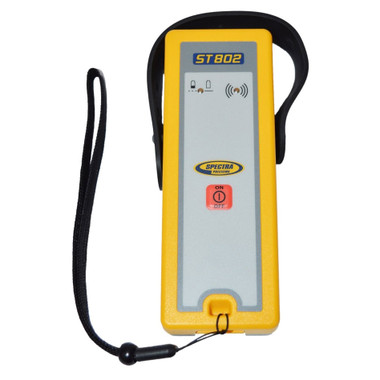
ST802 Signal Transporter
Extends the radio range between laser, remote and receiver. $212.00
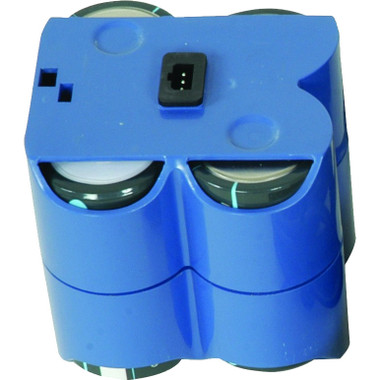
Q104667 Spare NiMH Pack
A second pack in the truck means a dead battery never ends the day. $149.95
Not sure which package fits?
Tell us what you are grading, how far you shoot and who is on the rod. We will tell you which GL622 package fits, and whether you need the signal transporter or a tilting base, before you spend a dollar. Family owned. Ships same day when you order by 12 noon Central.
Compare the packages
SPECTRA GL622N DUAL SLOPE LASER PACKAGES - Component Comparison
Swipe the chart sideways to see every column. Prices are live.
| Package | Receiver | Remote | Rod | Tripod | Price |
|---|---|---|---|---|---|
| GL622N | HL760 | RC602N | — | — | $3,128.00 |
| GL622N-1 | (2) x HL760 | RC602N | — | — | $3,275.00 |
| GL622N-14 | CR700 (machine or rod) | RC602N | — | — | $3,230.00 |
| GL622IR | HL760 | RC602N | — | — | $3,408.00 |
| GL622N-NR | HL760 | No remote | — | — | $2,895.00 |
| GL622N-17 | HL760 | RC602N | Feet/10ths | ALQR20 tripod | $3,185.00 |
| GL622N-27 | HL760 | RC602N | Feet/Inches | ALQR20 tripod | $3,185.00 |
| GL622N-19 | HL760 | RC602N | Feet/10ths | FGC20 elevator tripod | $3,295.00 |
| GL622N | HL760 | RC602N | Feet/Inches | FGC20 elevator tripod | $3,295.00 |
| GL622N-BL | None | None | — | Laser only | $2,825.00 |
| GL622N-BCC | None | None | — | Laser + case, no receiver or remote | $2,885.00 |
Every package includes the case, NiMH battery pack and charger, except GL622N-BL (laser only) and GL622N-BCC (laser and carrying case only).
Models Obsolete - DISCONTINUED - Direct Substitution
The original GL622 packages. They are still listed, and the last column is the current GL622N package to order instead.
Compare the series
GL612N vs GL622N
The GL612N has been discontinued. The GL622N is the current dual grade laser.
Swipe the chart sideways to see every column.
| GL612N DISCONTINUED | GL622N | |
|---|---|---|
| Slope | Single grade | Dual grade (Y and X) |
| Grade range | ± 25% (Y axis) | ± 25% (Y and X axes, one at a time) |
| Automatic Axis Alignment | No | Yes |
| PlaneLok and Grade Match | Y axis | Y or X axis |
| Leveling accuracy | 1/16 in. @ 100 ft | 1/16 in. @ 100 ft |
| Self-leveling range | ± 14 degrees | ± 14 degrees |
| Working diameter | 2,600 ft | 2,600 ft |
| Laser | 639 nm, Class 2 | 639 nm, Class 2 |
| Warranty | 5 years | 5 years |
Straight answers
Spectra Precision GL622N - Straight Answers.
What comes in the Spectra Precision GL622IR package?
This package includes the GL622IR dual grade laser, the RC602N radio remote control, the HL760 laser receiver with C70 rod clamp and 105516 vertical adapter, a Q104667 NiMH rechargeable battery pack, a Q104781 worldwide charger, a small carrying case, the operating manual and a 5-year warranty.
What if I forget to charge the battery pack?
The GL622IR runs on four D-cell alkaline batteries as a backup, about 40 hours, so a dead pack does not end your day. The NiMH pack is rated about 35 hours and can be charged inside or outside the laser. Alkaline batteries are not included.
How far does the GL622IR work?
With a receiver the working diameter is about 2,600 feet (800 m). The RC602N remote reaches up to 490 feet (150 m) from the laser, and the HL760 receiver talks to the laser from up to 330 feet (100 m).
What is PlaneLok?
PlaneLok locks the laser beam onto an HL760 receiver that you mount at a fixed elevation point up to 330 feet (100 m) away. The laser keeps servoing to the receiver, which takes drift and weather out of the setup.
What is Grade Match?
Grade Match measures an existing grade between two known points up to 330 feet (100 m) apart. Place the HL760 at the second point, start Grade Match, and the laser and remote display the measured grade value.
What is Automatic Axis Alignment?
On the GL622IR the laser can electronically turn its grade axis to point at an HL760 placed on the direction hub, so you do not have to rotate the laser on the tripod. Sight the laser roughly at the receiver (within 40 degrees) and the laser does the rest. It works on one axis at a time, up to 330 feet (100 m).
Is a dual grade laser the same as a dual slope laser?
Yes. Dual grade and dual slope mean the same thing: a rotary laser that can slope on two axes, X and Y, one axis at a time. The Spectra Precision GL622IR is a dual grade (dual slope) laser with a grade range of plus or minus 25% on both axes, and the GL622IR package adds the receiver and accessories listed above.
Who needs an infrared laser?
Contractors on sites that restrict visible beams, such as some active railroads, some mines and some industrial facilities. The rule comes from the railroad, mine operator, facility or project spec, not from a general federal requirement, so confirm it with the site safety authority. Others choose infrared simply because they do not want a visible beam. If a visible beam is allowed, the red-beam GL622N may fit better; call us and we will tell you.
Is the infrared beam safe?
Spectra classifies the GL622IR as a Class 1 laser, the lowest-hazard classification. Invisible radiation is not automatically harmless, so follow the manufacturer instructions, OSHA rules and your site procedures.
Will any laser receiver work with the GL622IR?
Not necessarily. The receiver has to detect the transmitter, and not every red-beam receiver detects an infrared laser. The GL622IR ships with an HL760 that works with it. If you want to use a different receiver, call us first.
Which receiver comes with the GL622IR?
The HL760 laser receiver with its C70 rod clamp and the 105516 vertical adapter, along with the RC602N remote, a NiMH battery pack, charger and carrying case.
Does OSHA require an infrared laser?
No. OSHA does not generally require infrared rather than visible-beam rotary lasers. Railroad, mine, airport and facility rules can.
Do infrared lasers work in sunlight?
Yes. With a compatible receiver, an infrared rotary laser works outdoors in daylight. Working range depends on the equipment and site conditions.
Can I see the infrared beam?
No. The beam is invisible, which is the point. The HL760 receiver in the package detects it and shows above, below or on grade.
Can I use the GL622IR vertically?
No. The GL622IR is not used for vertical alignment or 90-degree layout. For plumb and vertical work, use the red-beam GL622N.
How do I pair the HL760 receiver with the laser?
On the laser, open Settings and then Pairing. On the HL760, hold the Deadband and Audio buttons for two seconds, pick RDIO, set it to LS, then choose PAIR. The laser pairs automatically. A laser and receiver can be paired with up to two receivers and two remotes.
How tough is the GL622IR?
It is rated IP67 for dust and water and withstands a 3-foot (1 m) drop onto concrete. The operating range is -4 to 122 degrees F.
How long is the warranty?
Spectra Precision warrants the GL622IR for 5 years. The HL760 receiver carries a 3-year warranty. Calibration is not covered, so check it periodically. Call us any time and we will walk you through it.
Are infrared rotary lasers required on railroad projects?
Some railroad projects prohibit visible red laser beams and require or permit an infrared alternative. The requirement comes from the railroad operator, the project specification or the worksite safety procedures, not from a universal U.S. rule. Confirm yours before you order.
Can I use an infrared rotary laser in a mine?
Possibly. Some mines restrict visible beams, and an infrared laser can give a grade reference without one, but the mine operator's rules and equipment approvals decide. A Class 1 infrared laser is not automatically approved for hazardous or potentially explosive underground atmospheres.
Are infrared lasers safer than red lasers?
Safety depends on the product's certified classification, the radiation it emits and how it is used. The GL622IR is classified by Spectra as Class 1, the lowest-hazard classification, but invisible radiation is never automatically harmless. Follow the manufacturer's instructions and your site rules.
Can an infrared laser be used for machine control?
Yes, when the receiver and machine-control setup are approved for the transmitter you chose. Check compatibility before you buy or install anything, and call us if you want to run a machine receiver with an infrared laser.
Is an infrared laser more accurate than a red one?
No. Infrared does not by itself give more accuracy, range or reliability than a visible beam. Those depend on the instrument, the receiver and site conditions. You choose infrared because of the site, not for the numbers.
Can I use the GL622IR at an airport?
Possibly. An invisible beam avoids visible glare, but it is not exempt from aviation safety rules. The airport authority approves equipment, and a beam that could enter navigable airspace has to be evaluated under FAA procedures.
What is the difference between the GL622IR and the GL722-IR?
Both are dual grade infrared lasers. The GL622IR is plus or minus 25% on both axes with the HL760 receiver and RC602N remote and a working diameter of about 2,600 feet. The GL722-IR has a longer range, up to 3,000 feet, X axis plus or minus 10% and Y axis -0.5 to +25%, the RC703 long-range remote and the CR600 rod or machine receiver. Both are linked in the comparison on this page.
How do I use an infrared rotary laser?
Confirm the site rules allow it. Set the laser on a stable tripod. Establish a known benchmark and check calibration. Enter the grade on the X or Y axis. Read elevations with the receiver on a rod, following its above, below and on-grade indications. Recheck known references after any impact or move. Shut the laser down when the work is done.
Spectra GL622N downloads
The manufacturer documents, with our phone number on every one.
GL612N / GL622N User GuideFull operating manual, 23 pagesOpen the PDF GL6X2N Hands-On TrainingSpectra's step-by-step setup deckOpen the PDF GL612N / GL622N Datasheet, page 1Features, applications, benefitsOpen the image GL612N / GL622N Datasheet, page 2Full specifications for the laser, remote and receiverOpen the image Authorized Spectra Dealer
Call 1-877-866-5721
Family owned and operated. We set these systems up every week — tell us the machine and the laser you are running and we will spec it before you order.
Experience the value of Great Customer Service!


